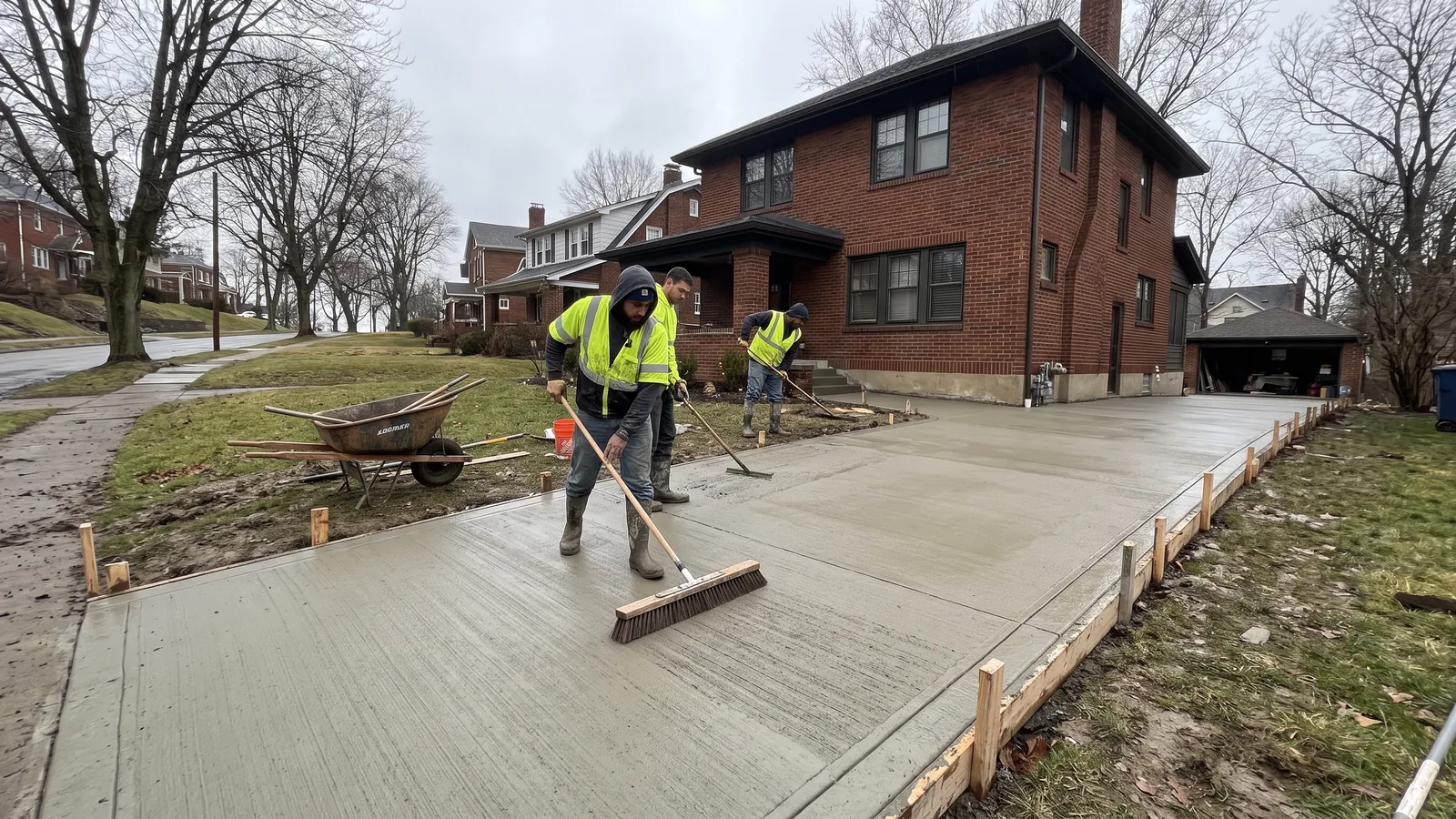
Concrete that's measured in person, priced in writing and poured for Ohio winters.
Driveways and the aprons the City regulates, patios plain and stamped, sidewalks and the notices that come with them, steps, garage floors, slabs, repair, leveling and resurfacing. Thickness, base and finish spelled out on the price before a form goes in the ground.
Insured crews · DOTE-licensed street contractor for apron and sidewalk work in the right-of-way · Permits and Ohio811 handled
A city of hills, old sidewalks and salt
Cincinnati's concrete has a harder life than most. The neighborhoods climb valley walls, so driveways and walks run on slopes and need drainage. The housing stock is old, so the sidewalks in front of it are old, and under the City's code the owner maintains them. And every winter the road salt comes out and goes to work on any surface that was poured without air in the mix. Here is the city in numbers, and the rule that matters most.
Eleven kinds of concrete work, residential and small commercial
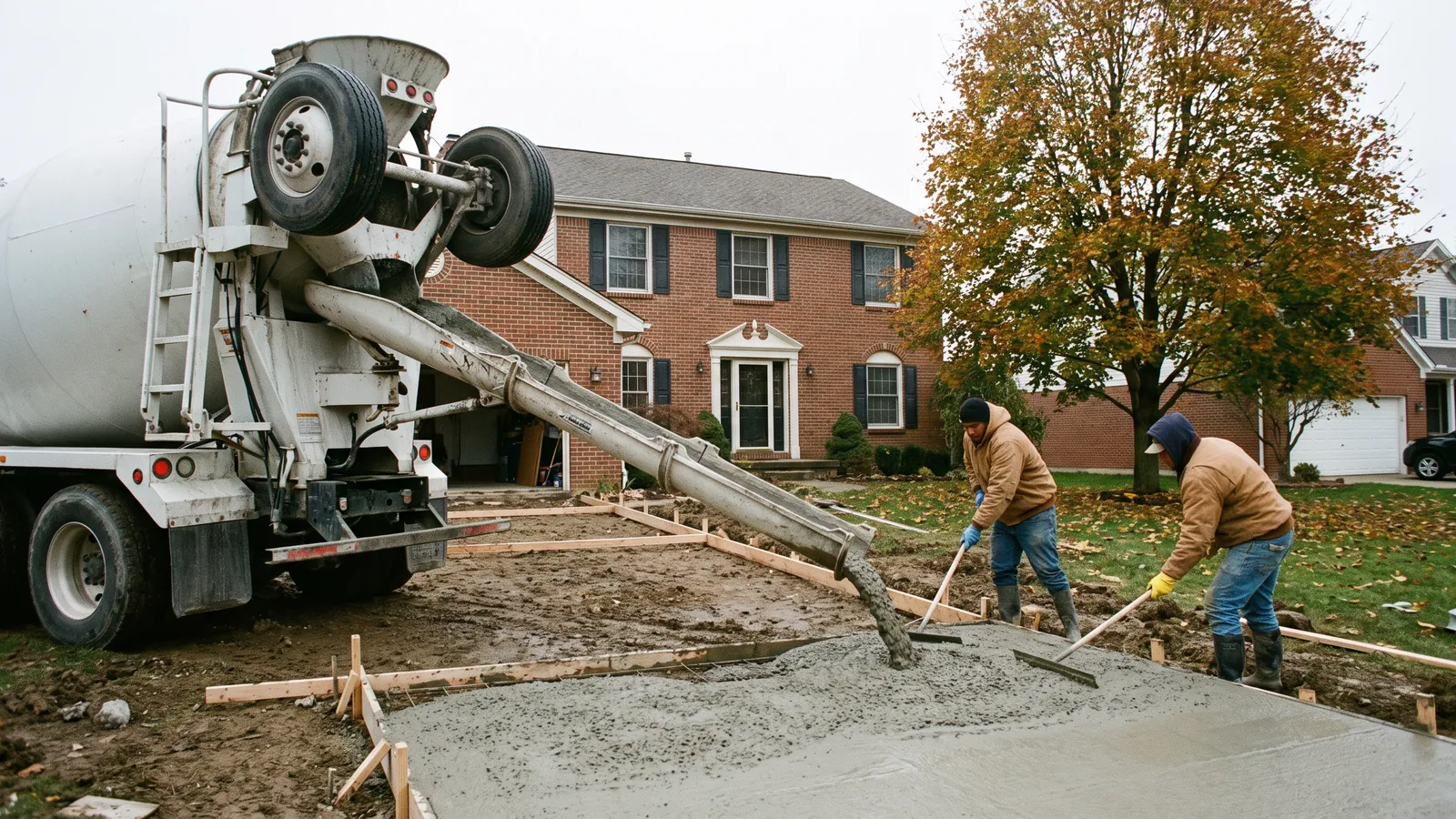
Concrete driveways
New, replaced or widened, 4 to 5 inches thick on a compacted base with air in the mix and joints cut where cracks would otherwise choose their own path.
Driveways →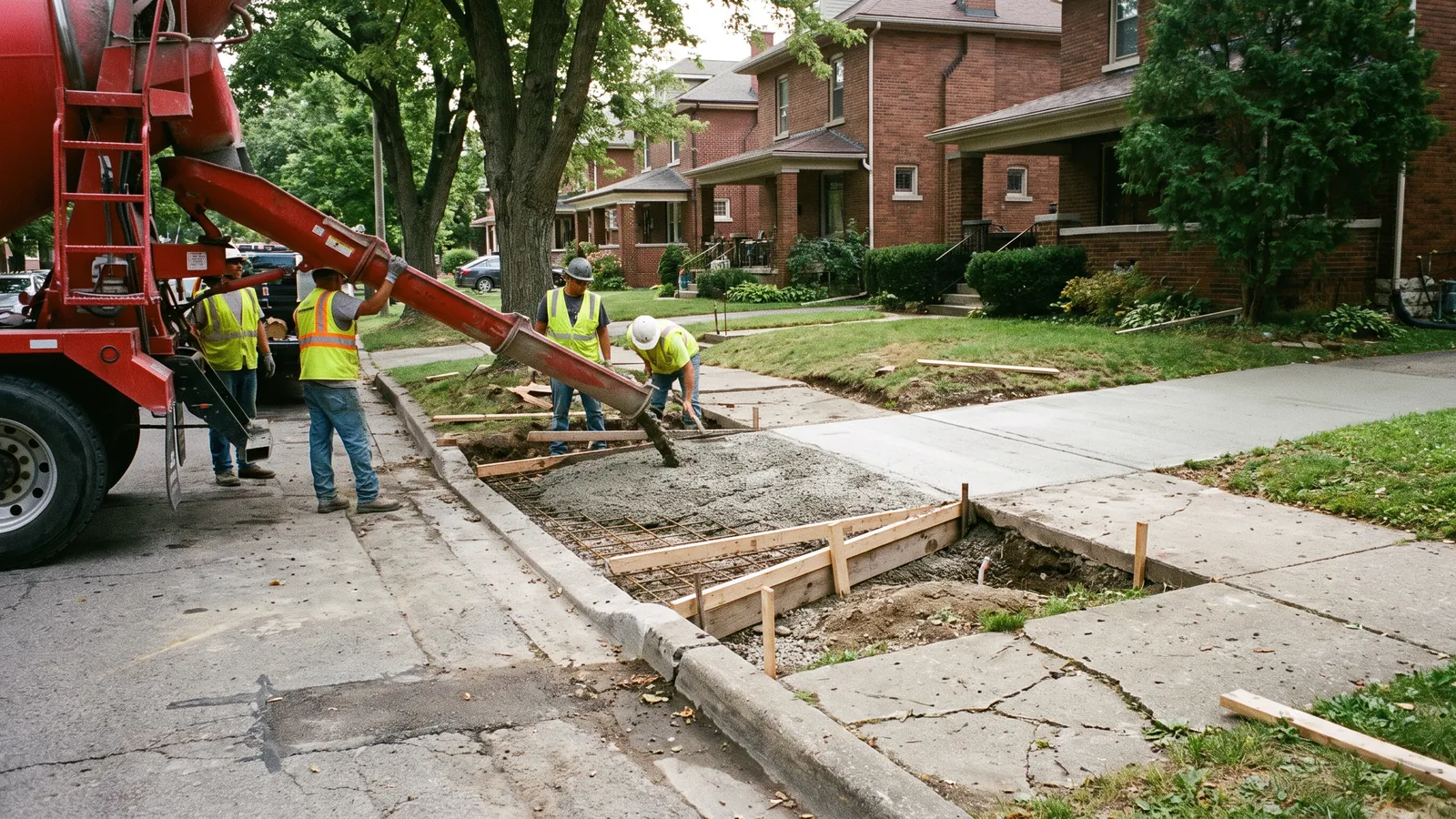
Driveway aprons
The part between the sidewalk and the curb, built to the City's 7-inch, 4,000 psi spec under a Street Opening Permit by a licensed street contractor.
Aprons →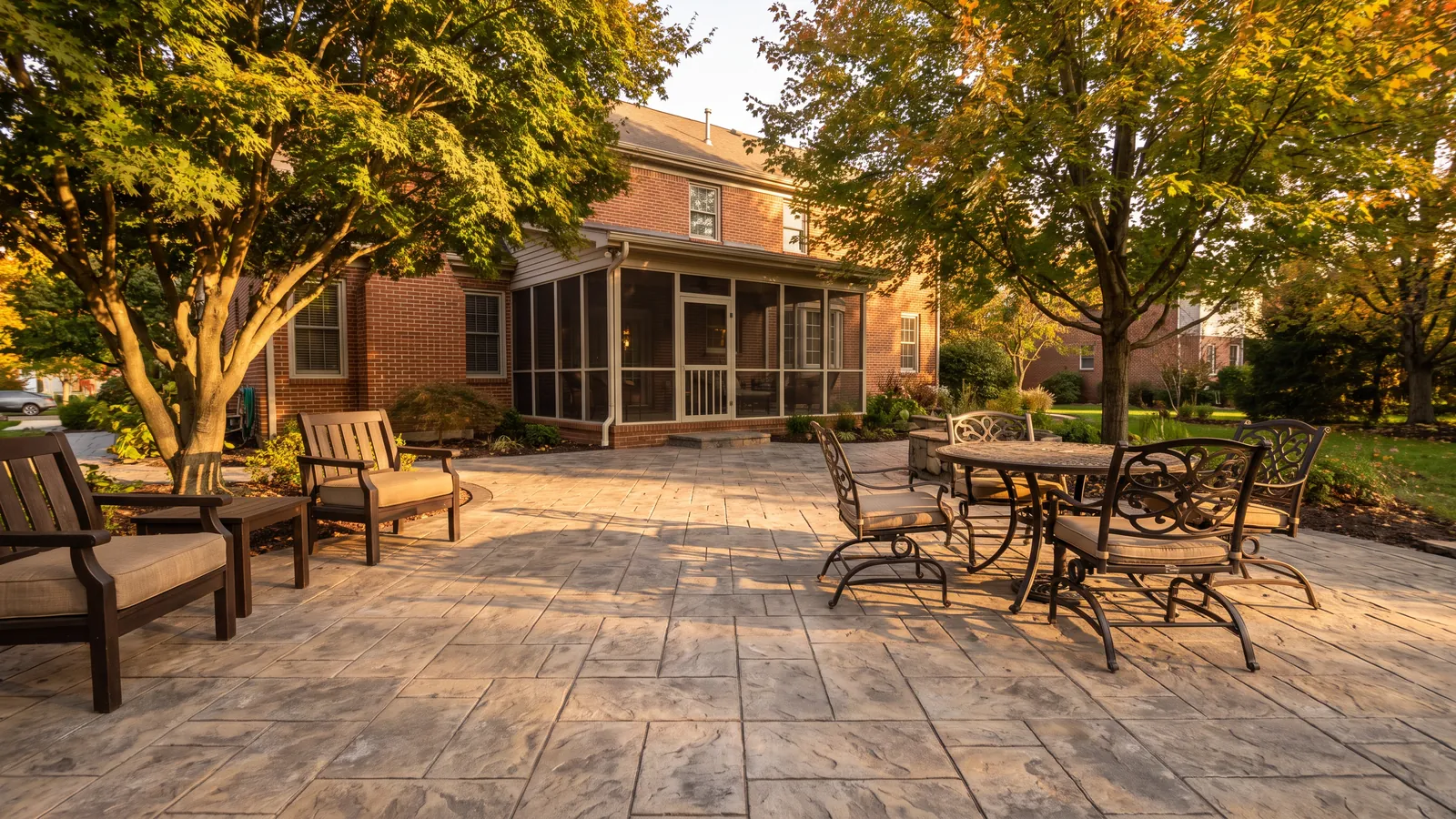
Patios, stamped and plain
Broom finish, exposed aggregate, stamped slate and flagstone patterns, integral color and stain, sealed for the first winter.
Patios →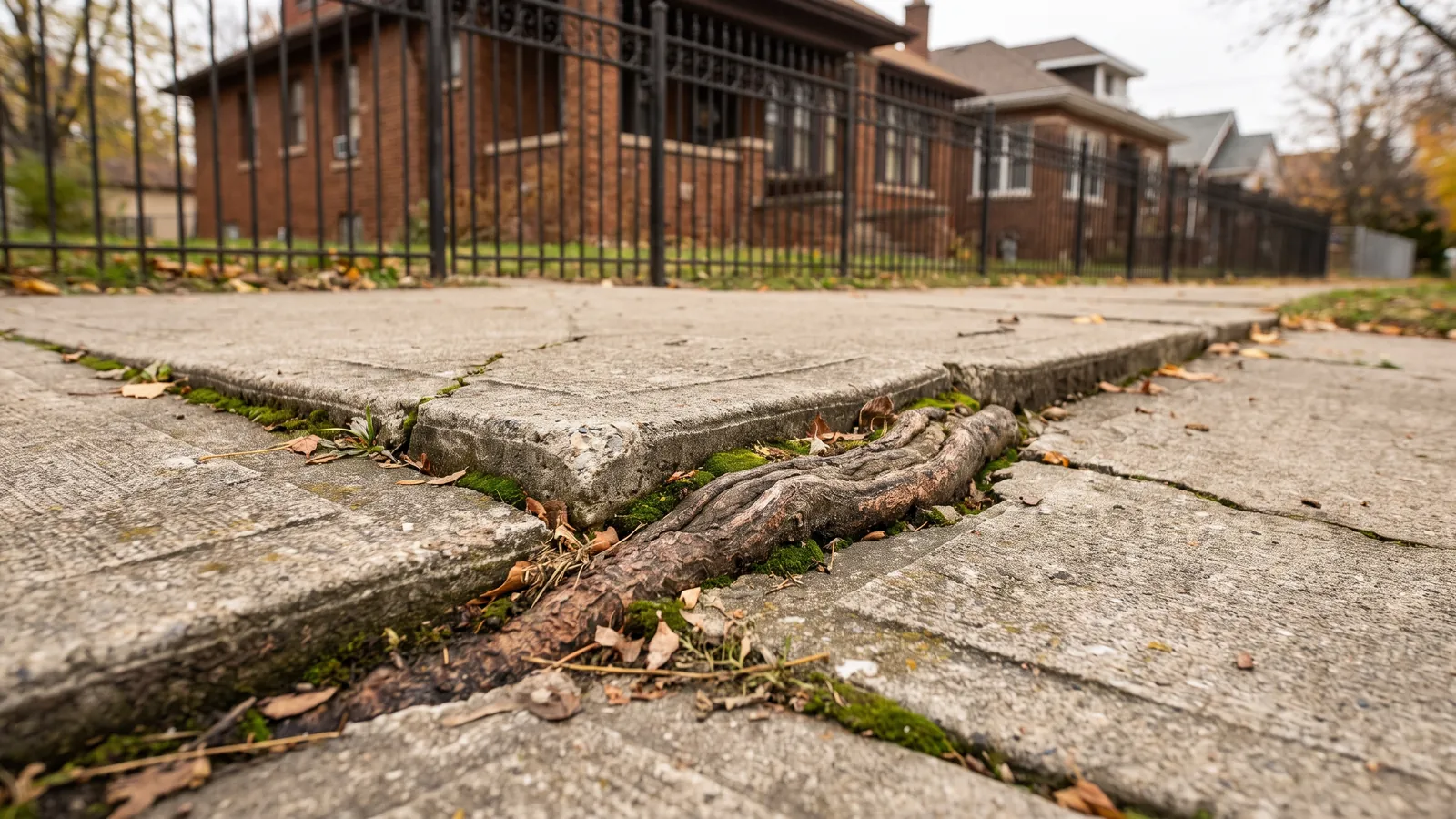
Sidewalks and walkways
City notice panels replaced to spec, front walks poured, tree-root heaves ground or lifted, and the paperwork handled.
Sidewalks →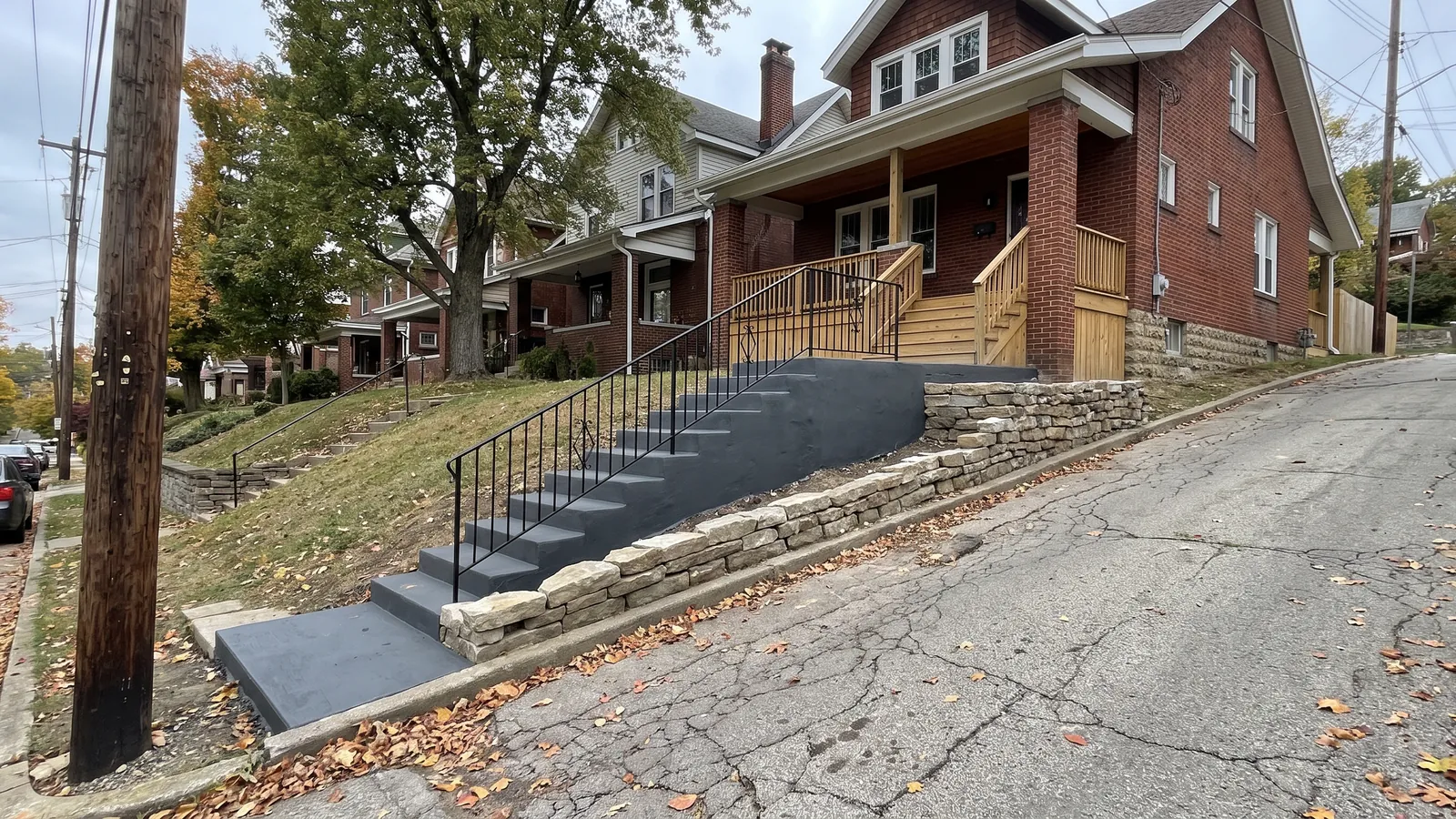
Steps and stoops
Poured steps with proper risers, footings below the frost line, rails set in sleeves, for the hillside houses that have a lot of them.
Steps →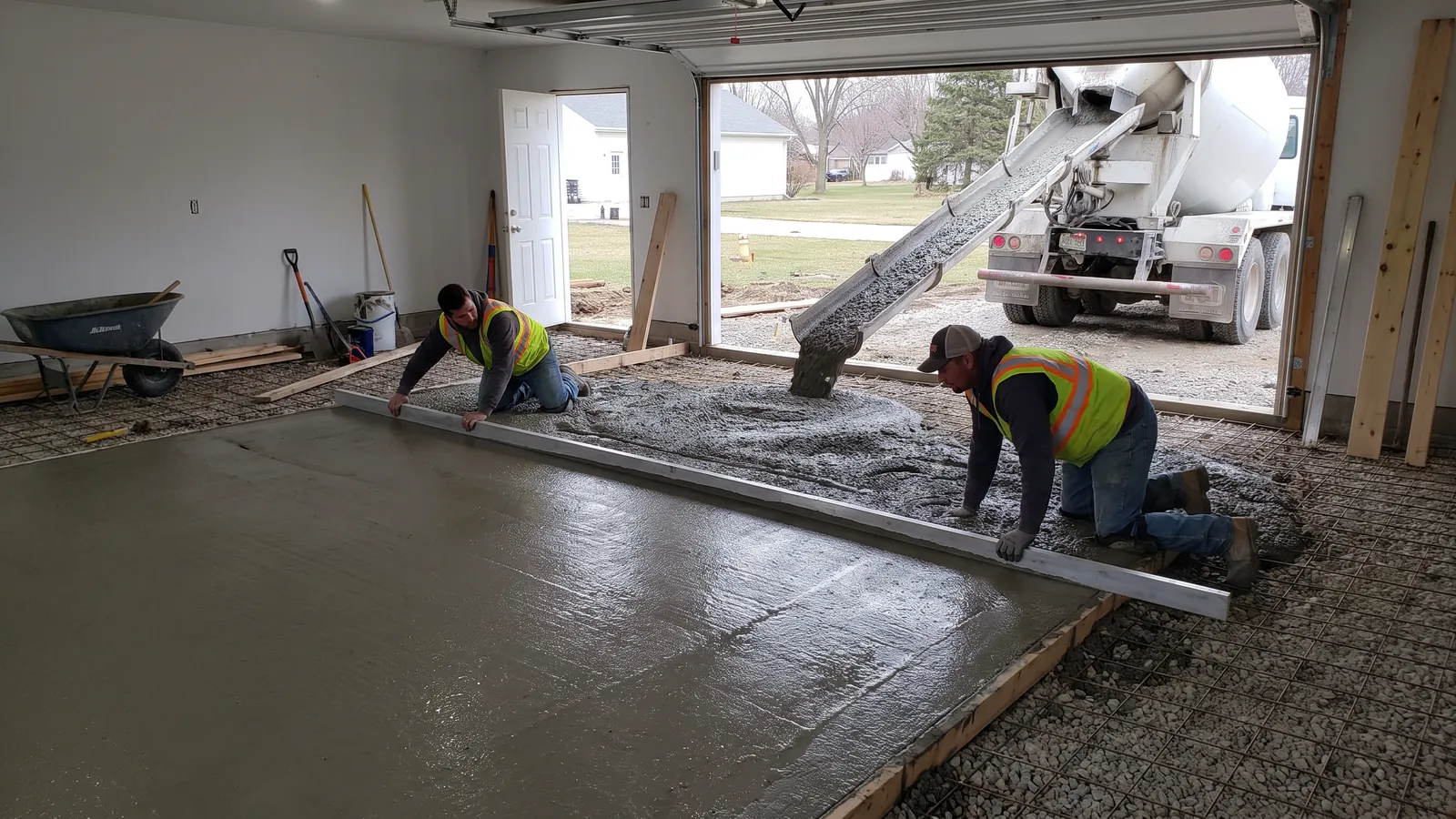
Garage floors and slabs
Garage floors, shed pads, AC and generator pads, basement floors: thickness and reinforcement sized to what will sit on them.
Slabs →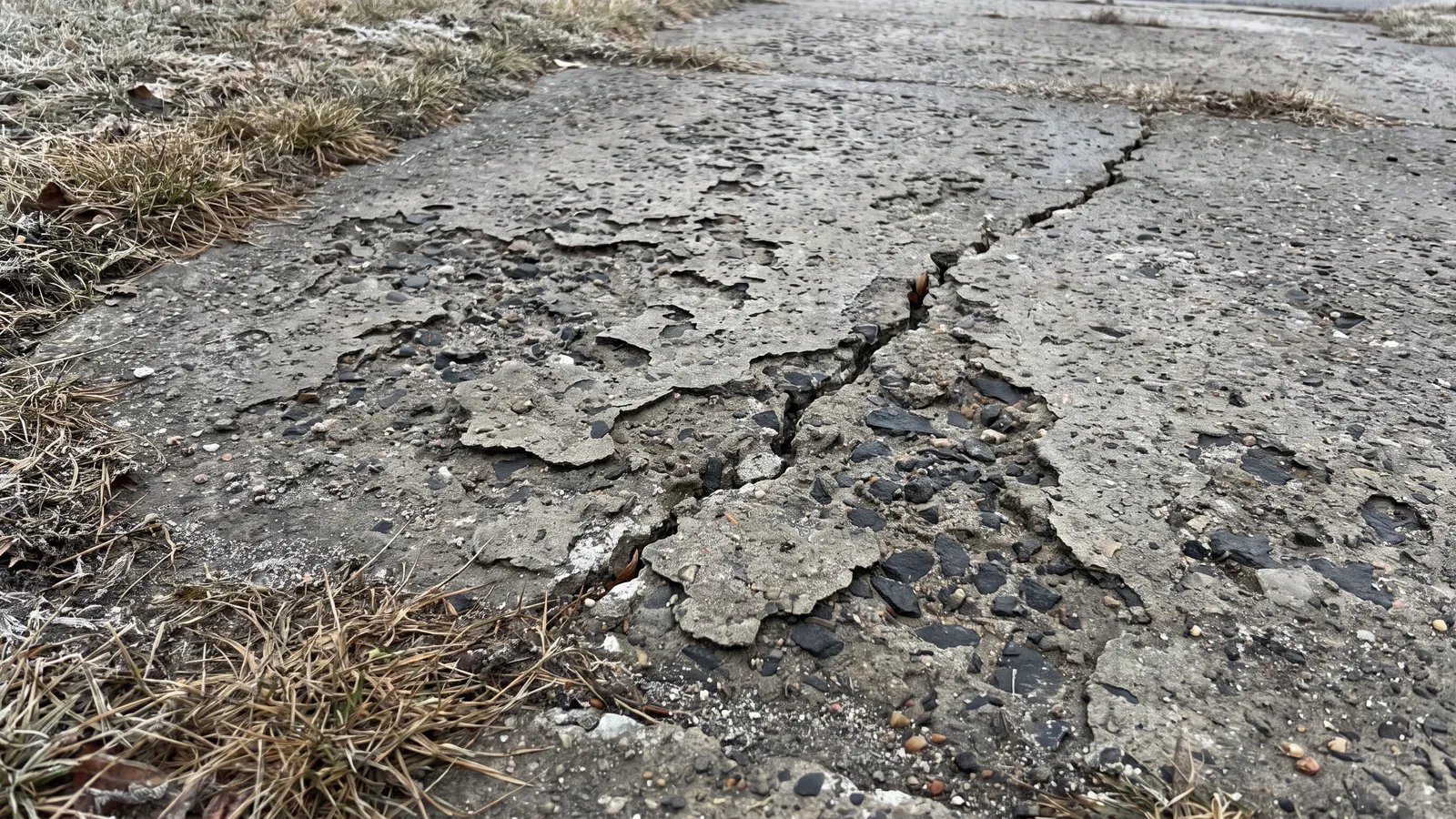
Concrete repair
Salt spalling, cracks, broken corners and failed joints: patched, overlaid or replaced, with a plain word on which is worth doing.
Repair →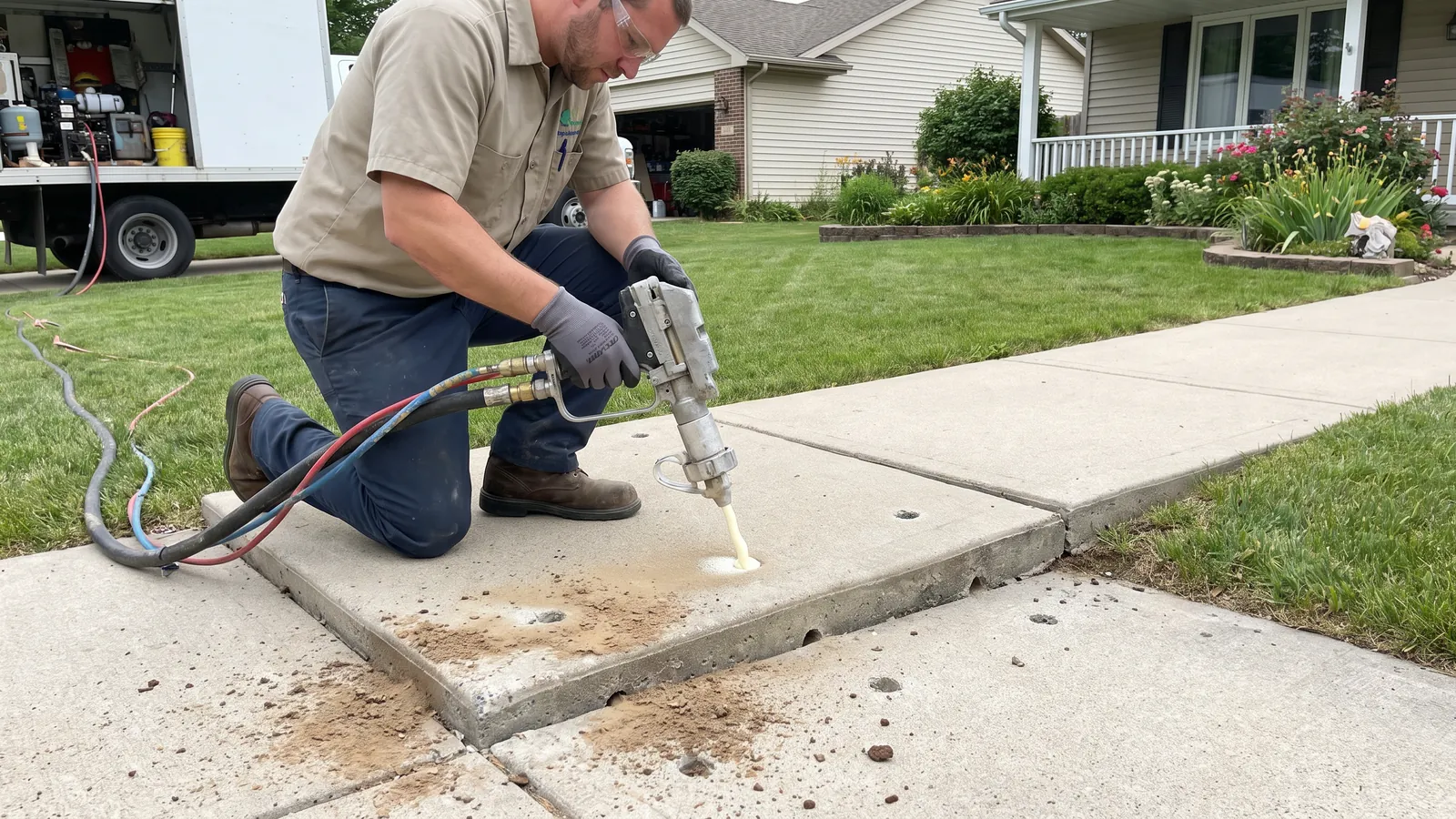
Concrete leveling
Sunken walks, steps and driveway panels lifted back level with polyurethane foam or mudjacking, in an hour, for a fraction of replacement.
Leveling →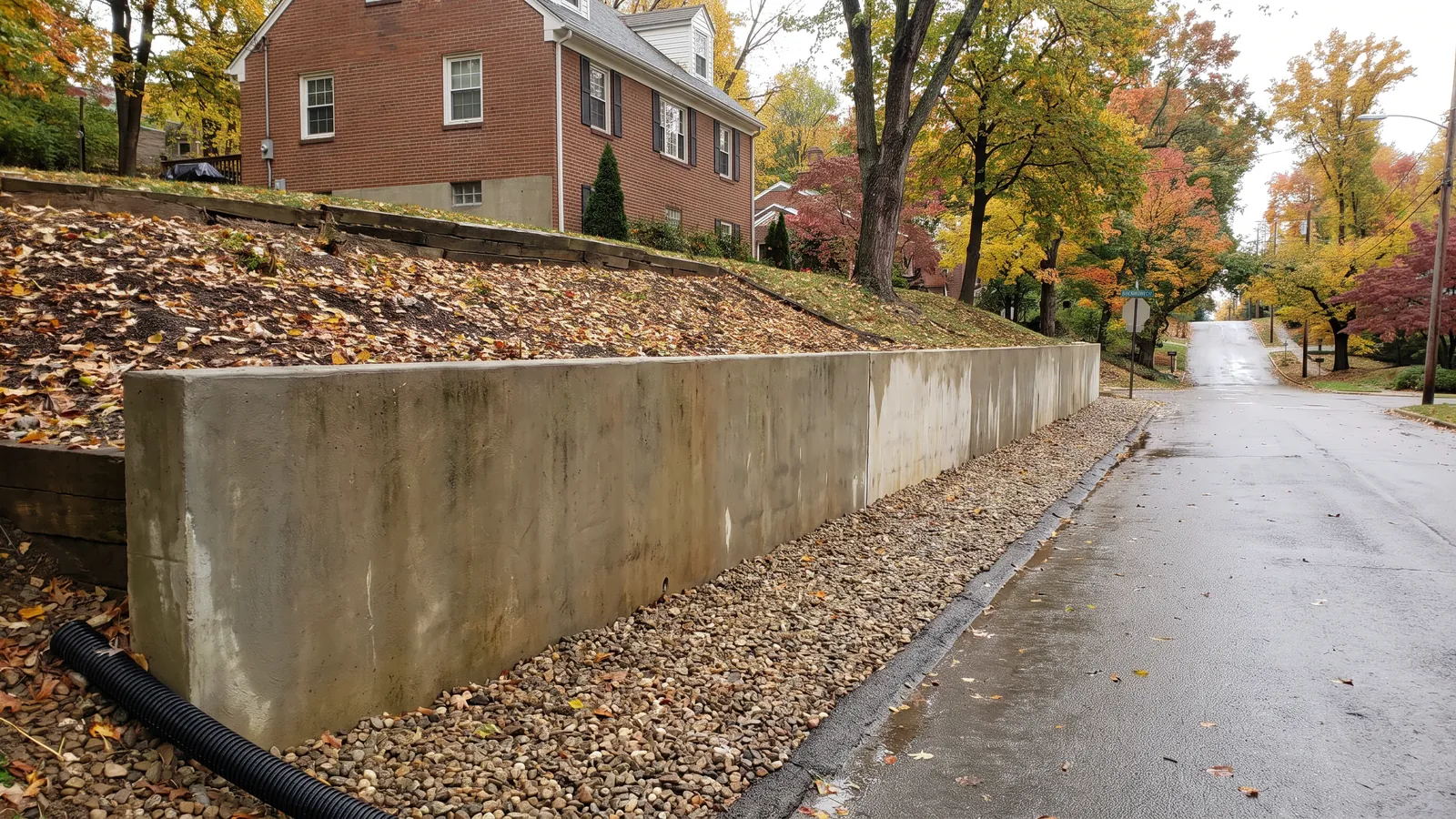
Retaining walls
Poured and block walls for the hillside lots, with drainage behind them, and an engineer when the height calls for one.
Walls →Where your driveway stops being yours
From the garage to the sidewalk, the driveway is on your lot and the rules are your building department's. From the sidewalk to the curb, it's the City of Cincinnati's right-of-way, and a different set of rules takes over: a Street Opening Permit from the Department of Transportation and Engineering, a contractor holding DOTE's street-contractor licence, a zoning check, utilities marked by Ohio811, and a slab 7 inches thick in an air-entrained 4,000 psi mix. The approach can't be within 50 feet of an intersection, has to stay 5 feet clear of hydrants, poles and drains and 10 feet from the center of a street tree, and the curb opening runs 15 to 30 feet for a house.
Most of the driveway bids that go wrong in this city go wrong at the apron: a contractor who isn't licensed for the right-of-way pours it anyway, or leaves it out and the homeowner finds out later. Ours includes it, under the permit, by a licensed street contractor, as a separate line you can see.
The apron rules, in fullFour stops between the phone call and the broom finish
- 1Measure
An estimator walks the job, measures it, checks the slope and where the water goes, and asks what's going on top of the slab.
- 2Price in writing
Square footage, thickness, base depth, reinforcement, mix, finish, joints, the apron under its permit, removal and haul-off, each on its own line.
- 3Permits and 811
Street Opening Permit for the apron, building permit for a slab that needs one, Ohio811 utility marks two business days before any digging.
- 4Pour and cure
Forms, base, reinforcement, the pour, the finish, joints cut the same day, cure protected for a week, sealed when it's ready. Nobody drives on it for seven days.
Cincinnati and the ring of suburbs on the Ohio side
Every neighborhood in the city, then north and east through Hamilton, Butler, Warren and Clermont counties. Each town has its own page because each one has its own building department, its own housing age and its own kind of lot.
- Cincinnati (every neighborhood)
- West Chester
- Mason
- Fairfield
- Hamilton
- Lebanon
- Blue Ash
- Anderson Township
- Colerain Township
- Milford
Before you call
What does a concrete driveway cost in Cincinnati?
Published 2026 national figures put plain broom-finish concrete at about $6 to $10 per square foot installed, exposed aggregate at $10 to $15 and stamped at $15 to $20, with a typical two-car driveway landing between $2,400 and $8,600 (HomeGuide). Tearing out the old one adds $2 to $6 per square foot. In Cincinnati the apron at the street is its own line, because the City requires it 7 inches thick in a 4,000 psi mix. The driveway cost page has the full table.
Do I need a permit to pour a driveway in Cincinnati?
For the part on your own lot, usually not. For the apron, the part between the sidewalk and the curb, yes: the City's Department of Transportation and Engineering requires a Street Opening Permit, and the work has to be done by a DOTE-licensed street contractor. Zoning gets checked first (513-352-2430) and Ohio811 marks the utilities. The permit guide walks through it.
Are concrete contractors licensed in Ohio?
Not by the state. Ohio licenses HVAC, refrigeration, electrical, plumbing and hydronics contractors; concrete and general contractors aren't on that list, and the Department of Commerce says residential contractors aren't required to hold a state licence. What does apply: the City of Cincinnati's street-contractor licence for anything in the public right-of-way, local building permits for larger slabs, and insurance. We won't show you a state licence number because there isn't one.
The city sent me a sidewalk repair notice. What are my options?
Three, per the City's Sidewalk Safety Program: hire a licensed contractor, do the work yourself, or let the City do it and bill you the estimate. The notice lists which panels and why. We'll walk it with you, tell you which panels really need replacing and which can be ground or lifted, and give you a written price to compare with the City's. The notice guide explains the rules.
When can concrete be poured in Cincinnati?
Reliably from about March to early December. Concrete needs to stay above roughly 40°F while it cures, so a pour in a cold snap means blankets, a cold-weather mix and a crew that knows the schedule. Driveways poured late in the fall should not see salt their first winter. The winter guide covers timing and salt.
How soon can someone look at the job?
Usually within a few days. Say what and where, and whether there's a City notice with a deadline on it; those go first. The phone is answered at any hour and the estimator comes out in daylight.
Get a written price
Tell us the job and where it is. Someone calls back the same day, an estimator measures it in person, and you get a written price with the thickness, the base and the finish spelled out. Nothing is poured on a verbal.