Stamped and decorative concrete: the patterns, the color, and the honest maintenance
Stamped concrete can look like slate, flagstone or wood plank for less than the real thing. It also needs more care than plain gray. Both halves of that sentence belong in the decision.
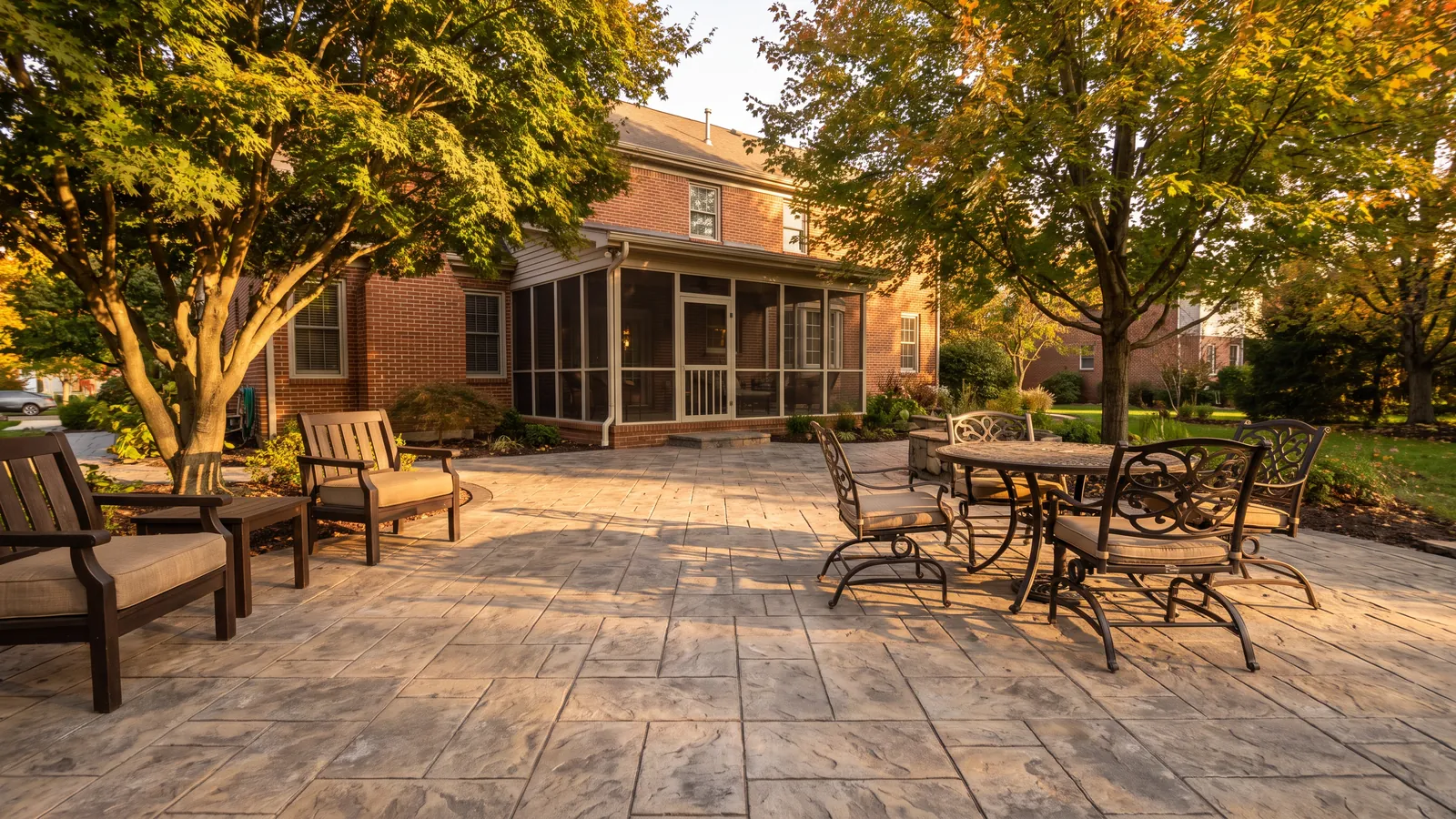
Stamped concrete is a normal slab with a pattern pressed into the surface while it's still soft, colored in the mix or on the surface, shadowed with a release agent, and sealed. Done by a crew that does it often, it's hard to tell from stone at a glance and it's one continuous slab, which pavers aren't. Done by a crew that does it twice a year, the pattern is uneven, the color blotchy and the sealer peeling by spring. This page is what to know before you choose it, and what to ask.
The patterns and finishes
- Ashlar slate. Rectangular stones of mixed sizes with a slate texture. The most popular pattern for patios and the one that reads most naturally in Cincinnati's brick-and-stone neighborhoods.
- Random flagstone. Irregular shapes, a more rustic look, good for garden paths and pool surrounds.
- Wood plank. Boards with grain, popular for porches and pool decks because it looks like a deck without the splinters.
- Cobble and brick. Running-bond or basketweave patterns for walks and driveway borders.
- Seamless textures. A stone or slate texture with no pattern lines, often with hand-cut joints.
- Exposed aggregate. Not stamped, but decorative: the stone in the mix revealed by washing the surface. Durable, grippy and cheaper than stamping.
- Stains and dyes. Acid stains and water-based dyes applied to cured concrete for a mottled or solid color, used alone or with stamping.
Color
Integral color goes into the mix at the plant, so the color runs all the way through and a chip doesn't show gray. A color hardener is broadcast onto the surface and worked in, giving a denser, more wear-resistant top with richer color. A release agent, usually a darker powder, is applied before stamping and partly washed off afterward, leaving the shadowing in the texture that makes stamped concrete look like stone. Two or three products working together, which is where the skill is.
Sealing, the part nobody mentions at the sale
Stamped concrete needs a sealer to hold its color and shed water, and the sealer needs renewing every two to three years in this climate. Skip it and the color fades, the surface takes salt damage, and the shadowing washes out. A sealer can also make a stamped surface slippery when wet, so a slip-resistant additive goes in on pool decks and steps. Our price includes the first sealing after cure; the sealing guide covers the upkeep.
Where stamped concrete isn't the right call
A driveway apron in the right-of-way, which the City wants broom-finished for traction. A steep driveway, where the texture fills with ice. A surface that will be salted hard every winter; integral color and sealer help, but plain air-entrained gray is tougher. And a budget that doesn't include re-sealing; a stamped patio left unsealed for a decade looks worse than a plain one.
Cost
Published 2026 figures: stamped patios $9 to $30 per square foot installed against $4 to $12 for plain (HomeGuide, July 2025 page); stamped driveways $15 to $20 per square foot against $6 to $10 for plain (HomeGuide, June 2025 page). Pattern, color count, borders and sealing all move the number. The stamped concrete cost page breaks it down.
Questions about this work
Does stamped concrete crack more than plain?
No; it's the same slab. It cracks the same way, in the joints if they're cut right. The difference is that a crack across a stamped pattern is more visible than one across broom finish.
Can you stamp an existing patio?
Not the old slab itself, but a stamped overlay (a thin bonded layer) can be applied over a sound existing patio and stamped. The resurfacing page covers overlays.
How do I pick a color?
From samples on real concrete, outdoors, in the light the patio will sit in. Colors look darker wet and after sealing. We bring sample chips and will pour a test if the job is big enough to justify it.
Is it slippery?
Sealed stamped concrete can be when wet. A slip-resistant additive in the sealer fixes that and goes on pool decks and steps by default.
How often does it need re-sealing?
Every two to three years in Cincinnati, sooner on a surface that gets de-icer. It's a day's work with a sprayer and it keeps the color.
Can I salt a stamped driveway?
Not the first winter, and sparingly after. Sand for grip, or a calcium-based de-icer rather than rock salt, and a good sealer.
Get a written price
Tell us the job and where it is. Someone calls back the same day, an estimator measures it in person, and you get a written price with the thickness, the base and the finish spelled out. Nothing is poured on a verbal.