Eleven kinds of concrete work, and what each one is made of
Residential and small commercial flatwork across Cincinnati and the inner suburbs. No foundations, no structural engineering, no commercial paving; the things we do, we do to the spec on the price.
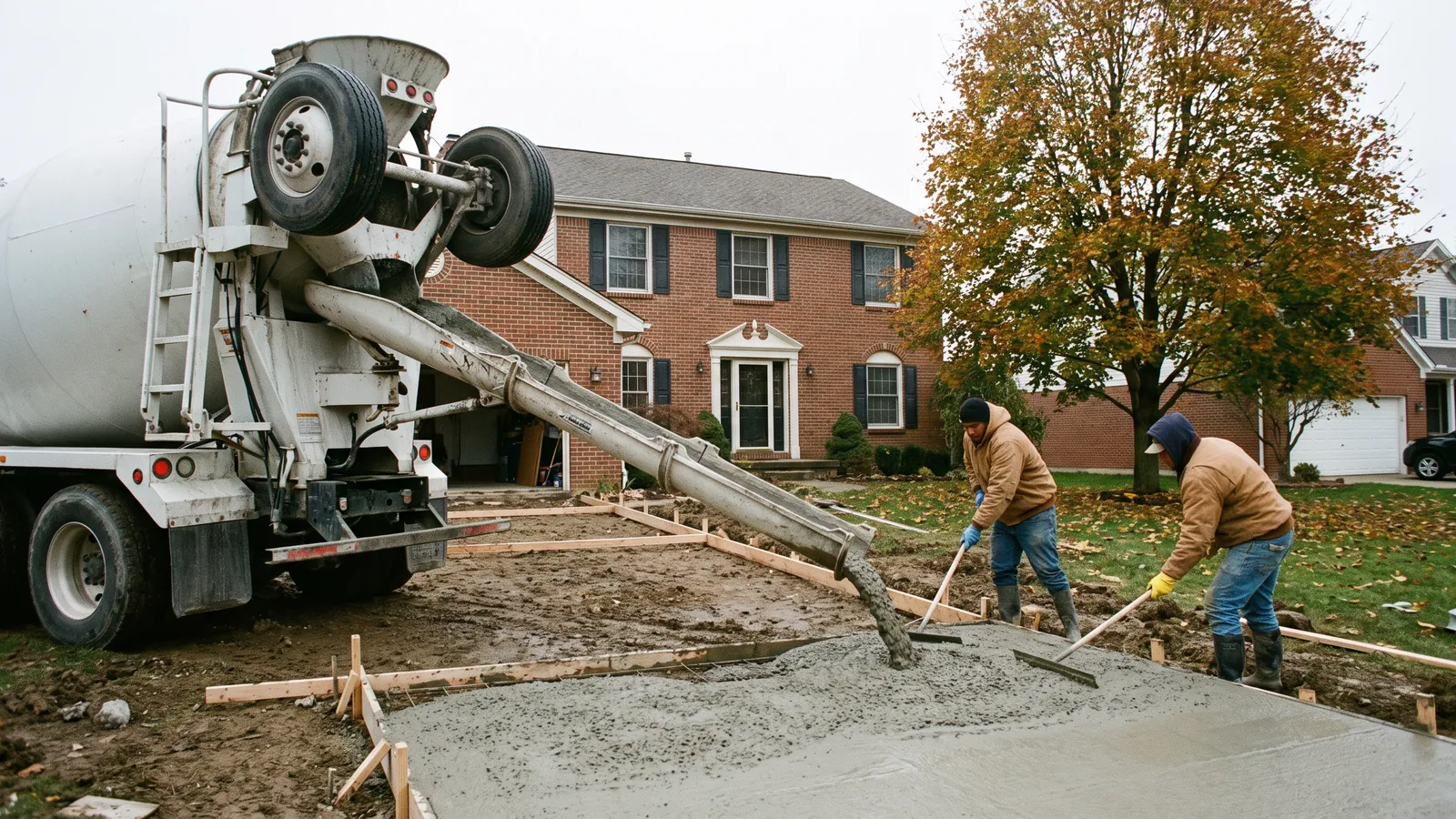
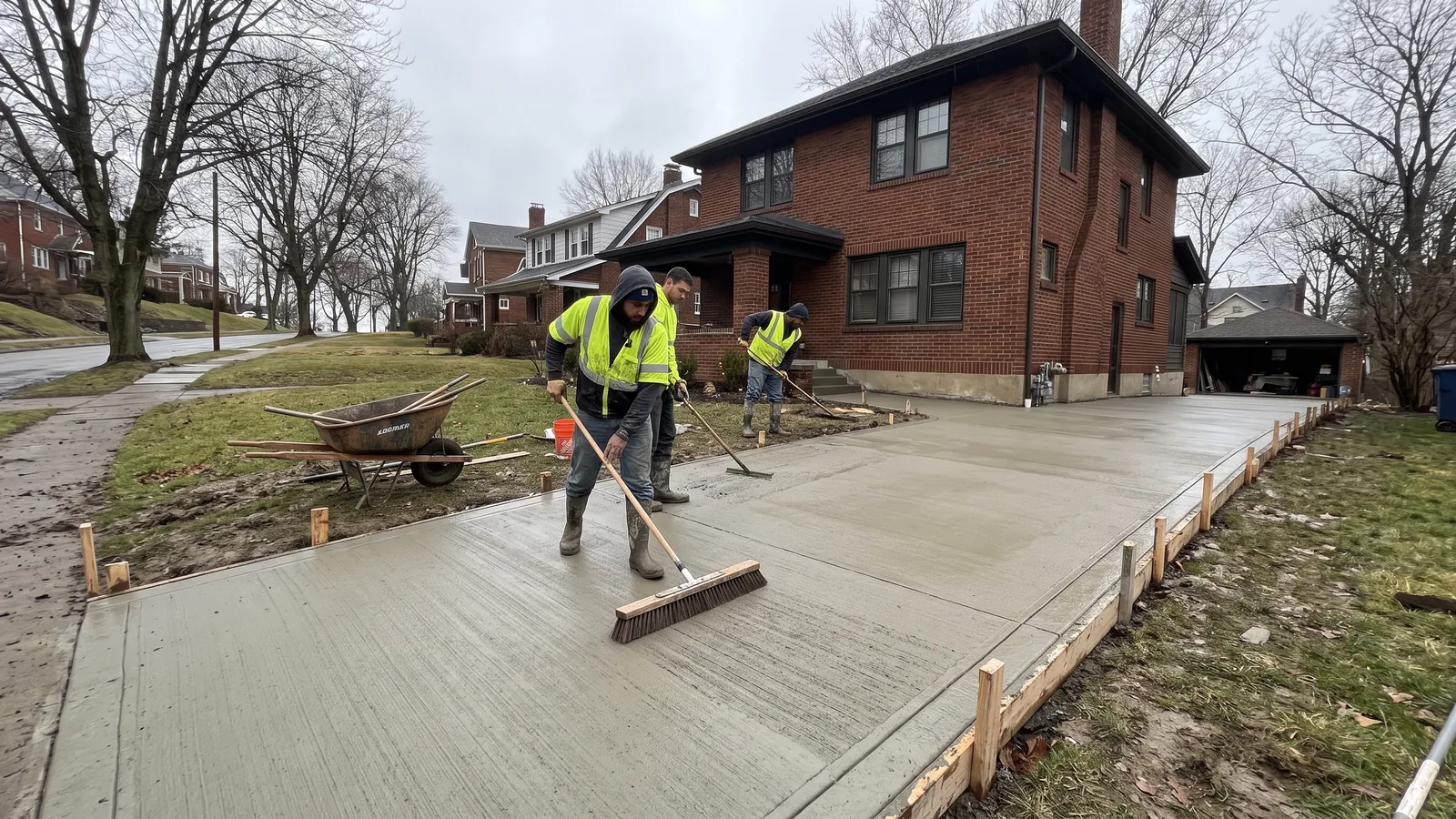
Concrete driveways
New, replacement and widening, 4 to 5 inches on a base that drains, air-entrained, with the City apron included.
Read more →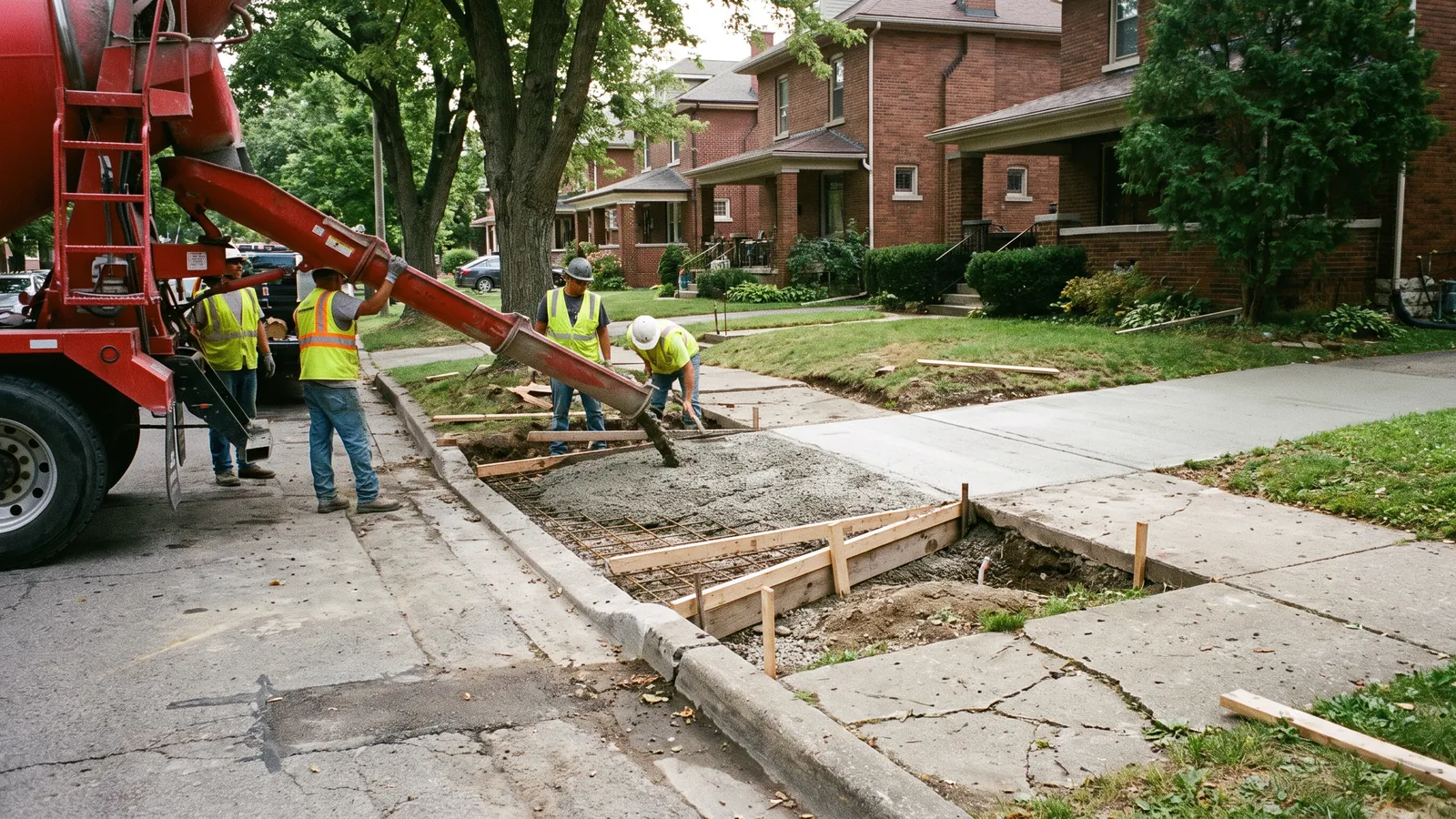
Driveway aprons
The right-of-way section, 7 inches of 4,000 psi concrete under DOTE's permit, by a licensed street contractor.
Read more →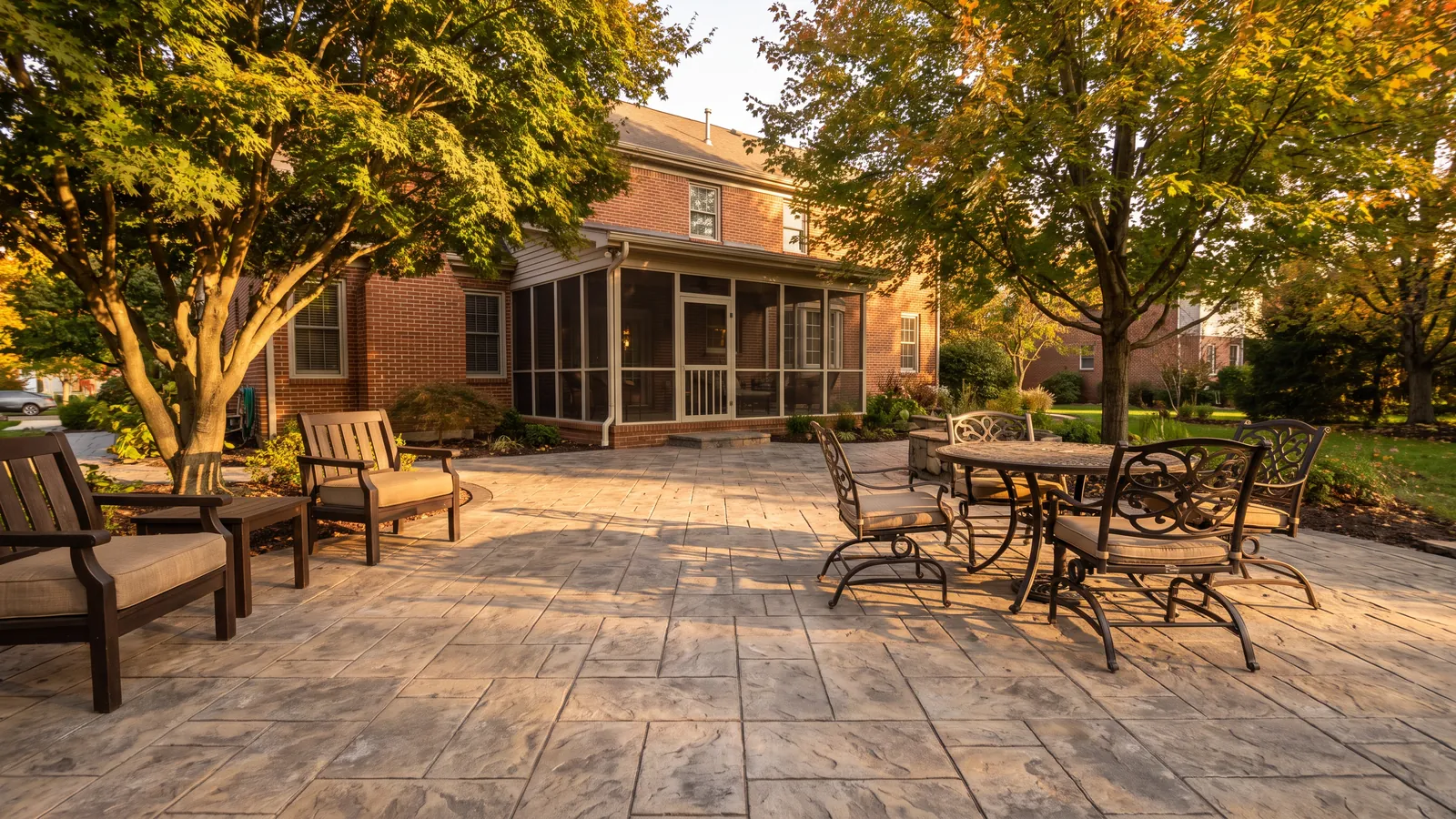
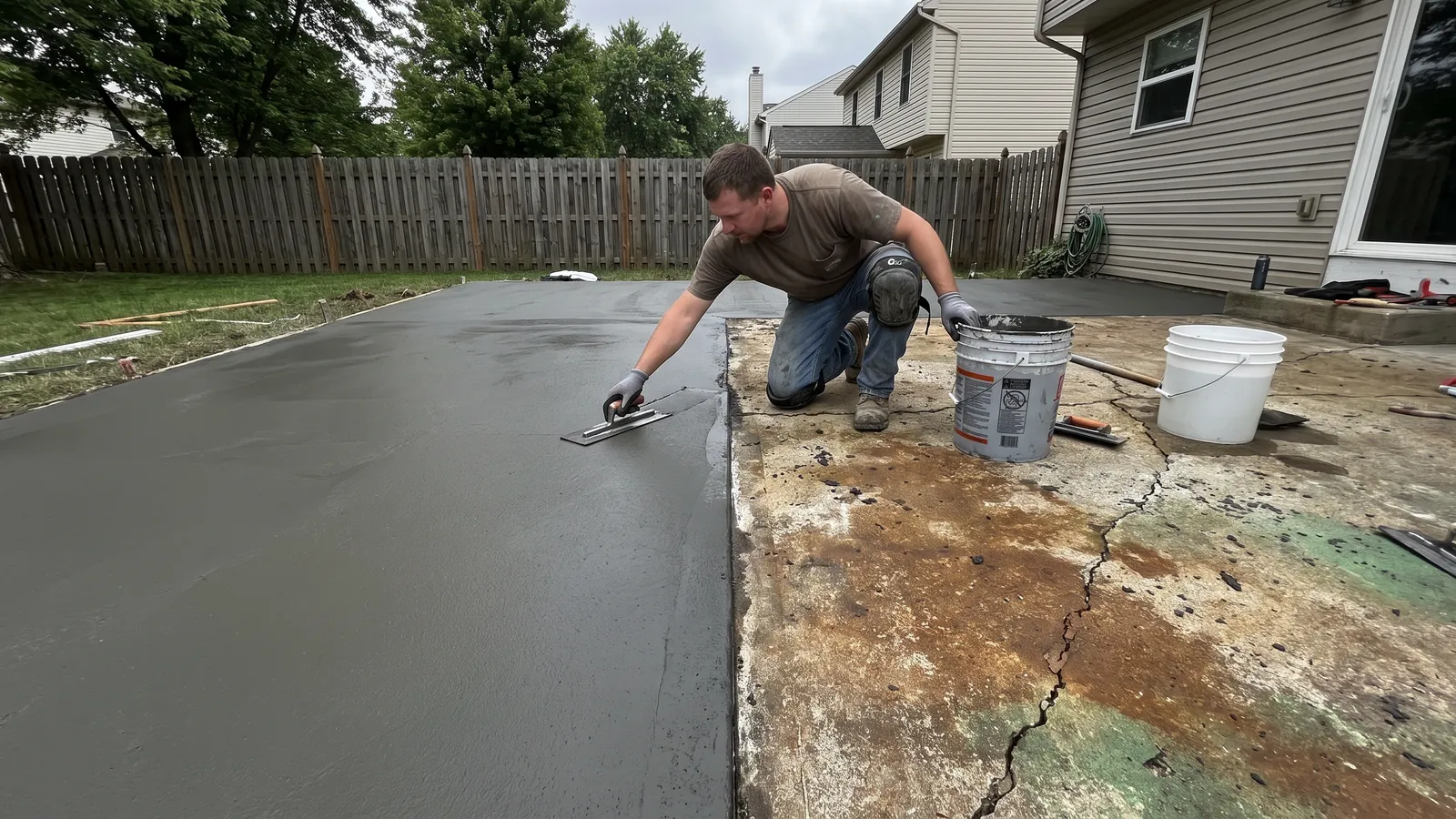
Concrete patios
Broom, exposed aggregate and stamped, pitched to drain, pool decks and porch floors too.
Read more →Stamped and decorative
Slate, flagstone, plank and cobble patterns, integral color, release and a sealer with grit.
Read more →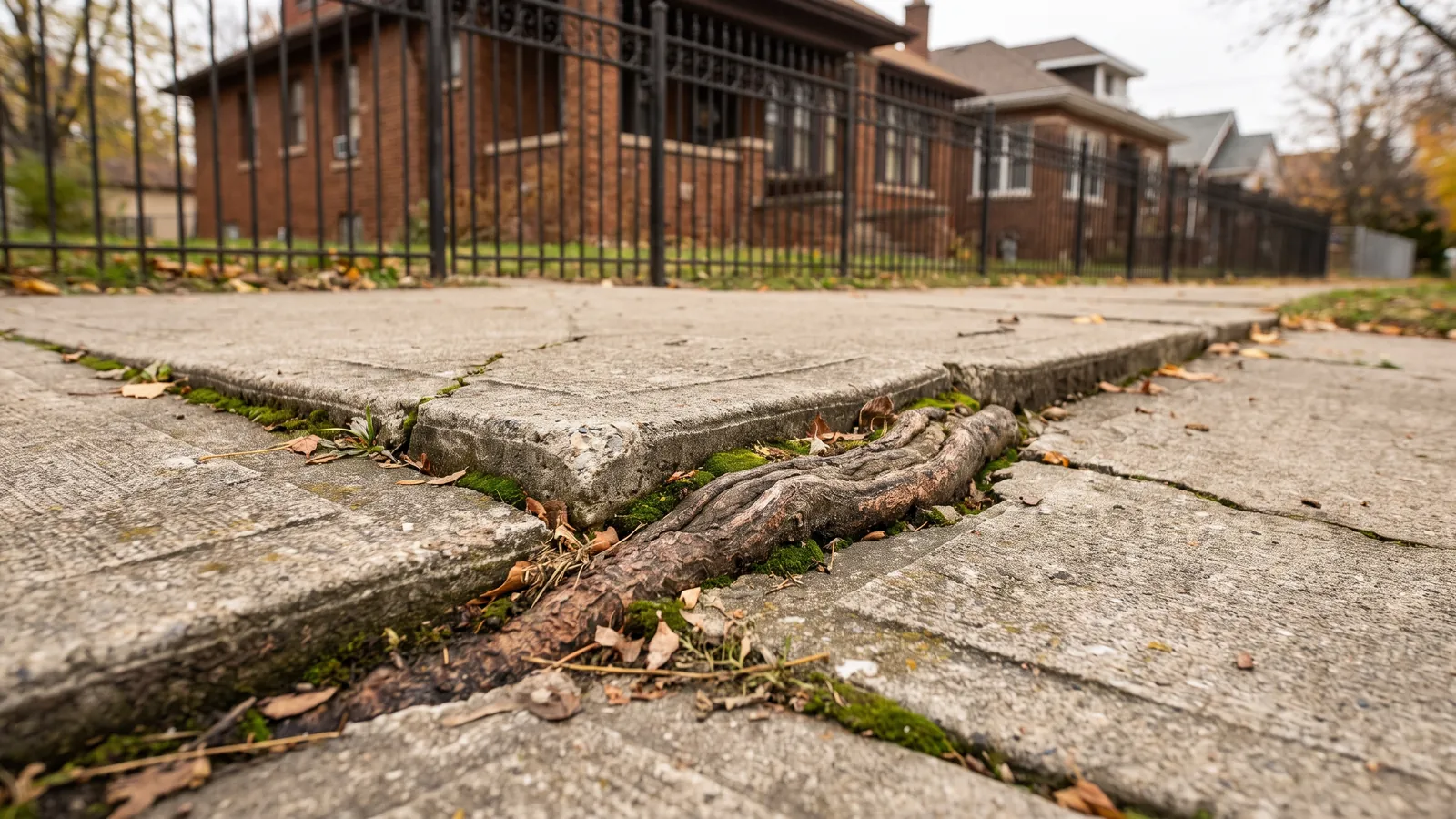
Sidewalks and walkways
City-notice panels replaced or lifted, front walks and paths poured, the permit handled.
Read more →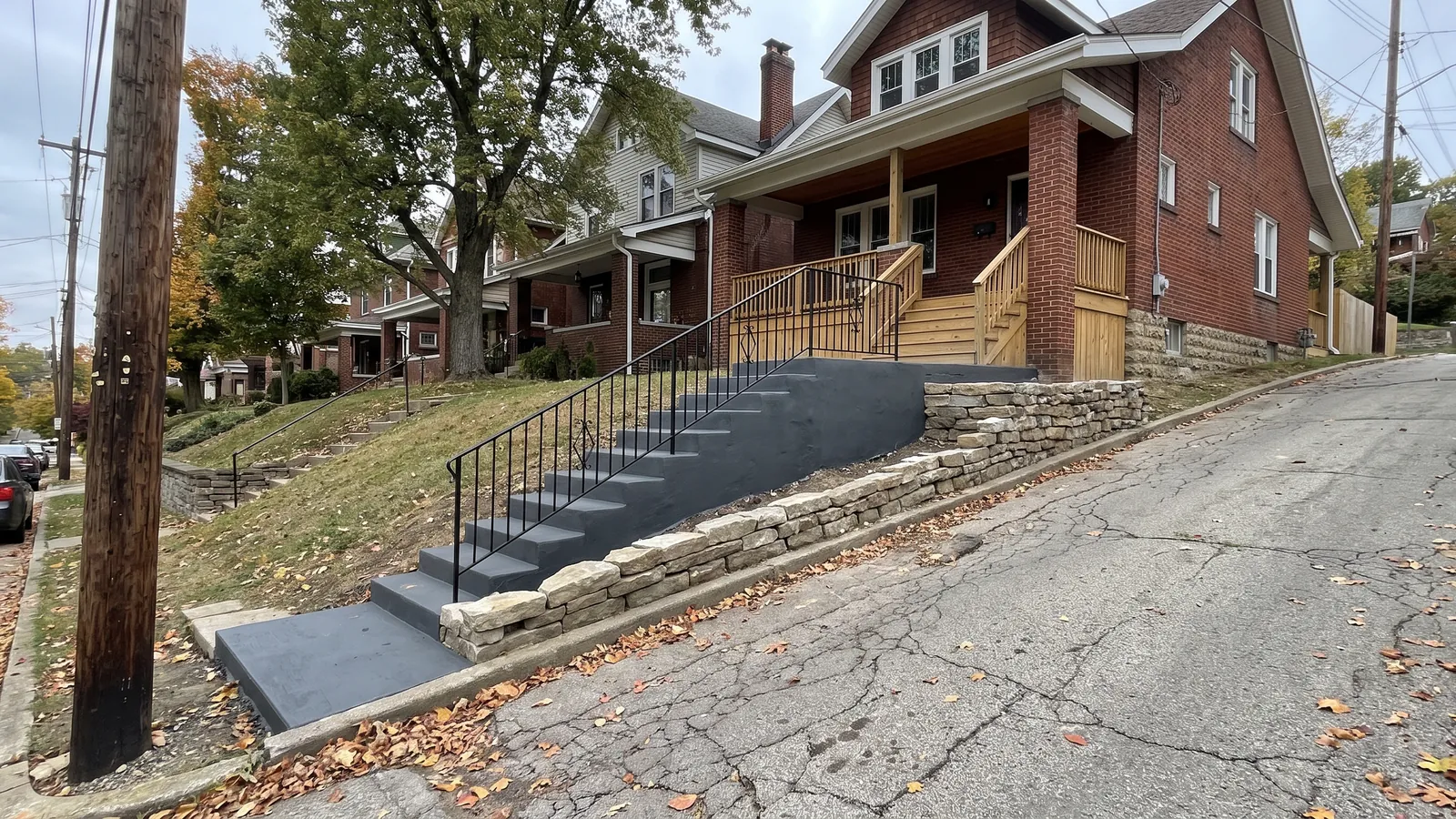
Steps and stoops
Poured steps on footings below the 30-inch frost line, even risers, rail sleeves cast in.
Read more →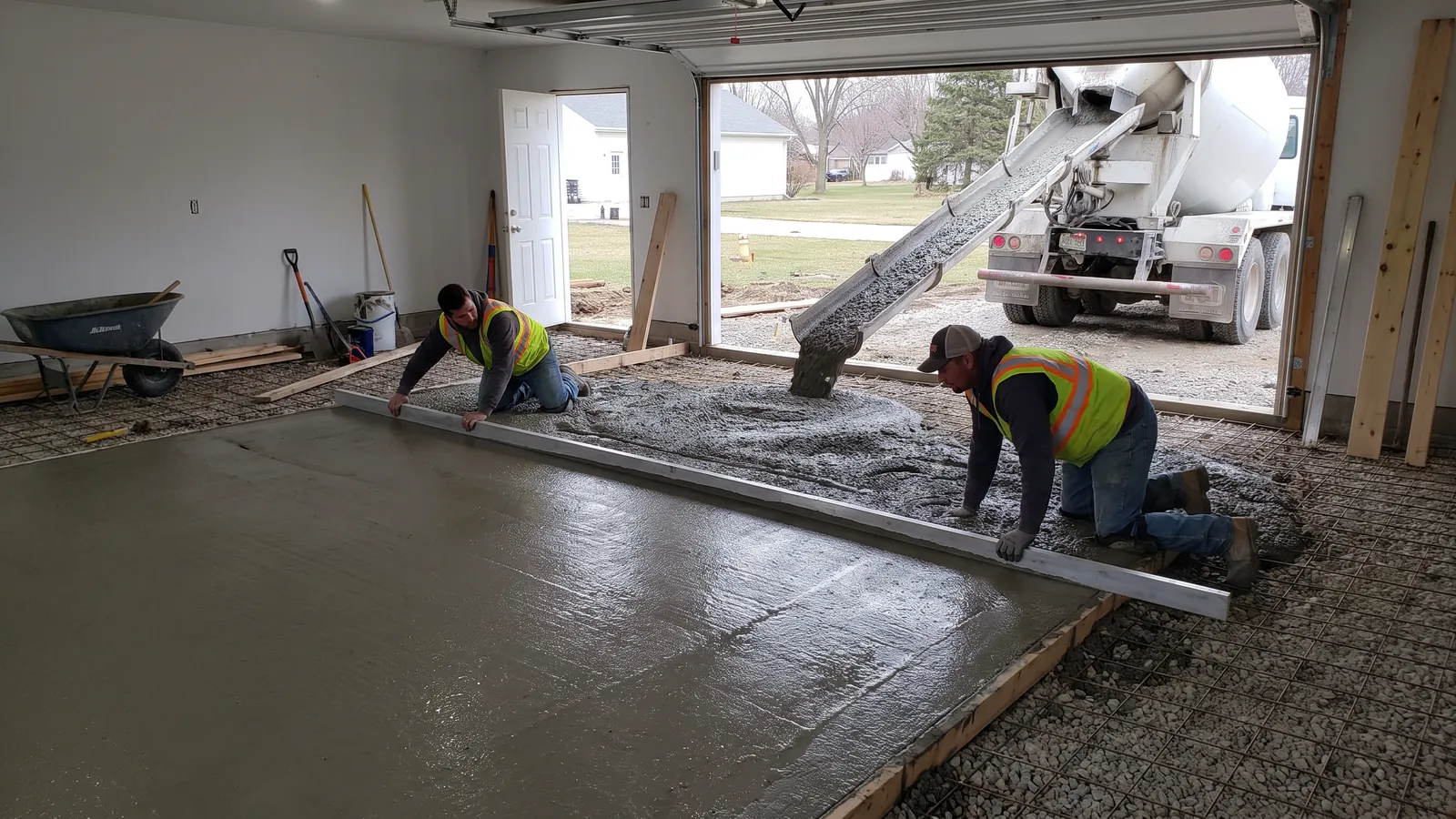
Garage floors and slabs
Garage floors, shed and workshop pads, AC pads, basement floors, sized to the load.
Read more →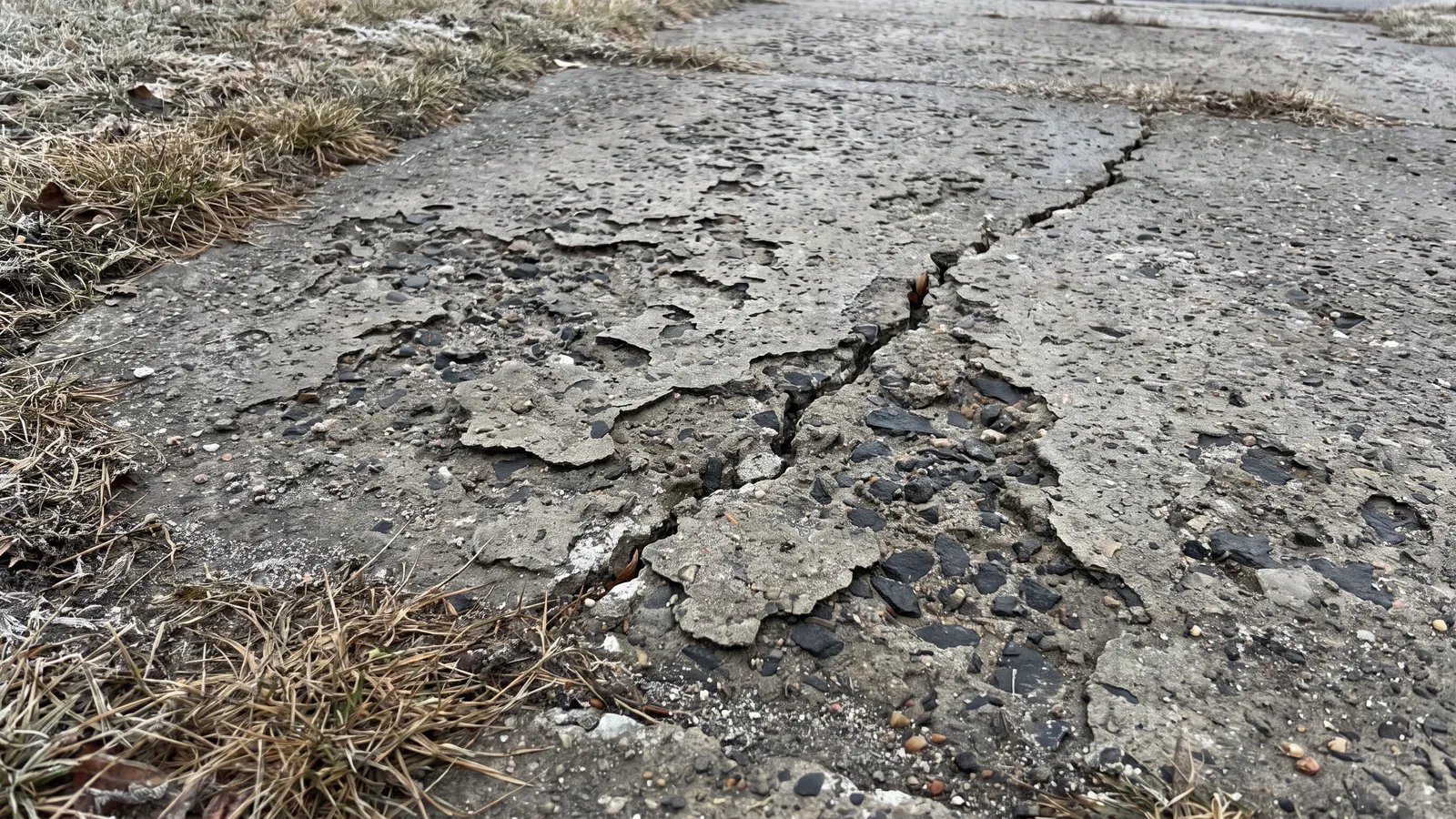
Concrete repair
Spalling, cracks, broken corners and failed joints: patched, overlaid, lifted or replaced, honestly.
Read more →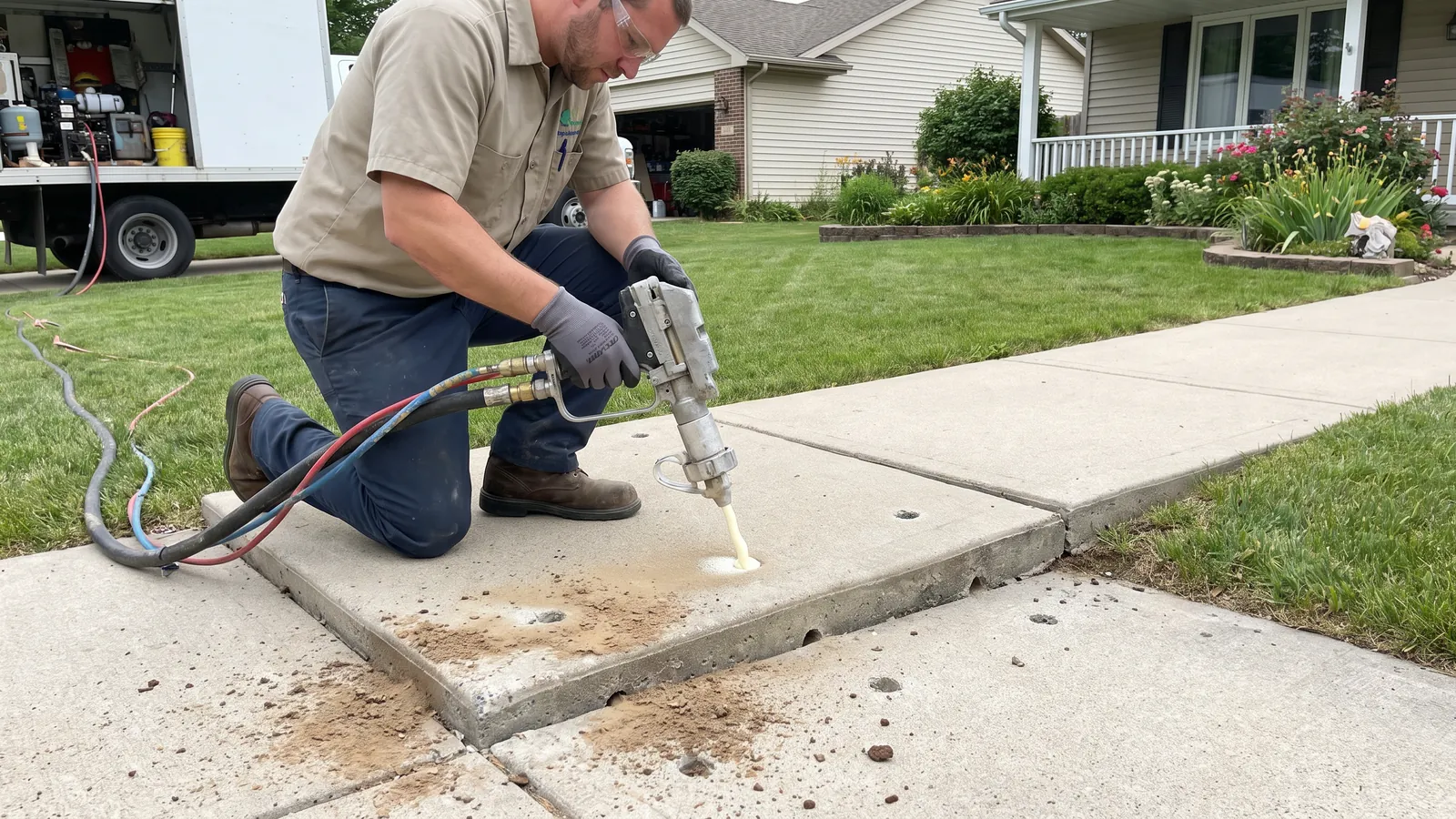
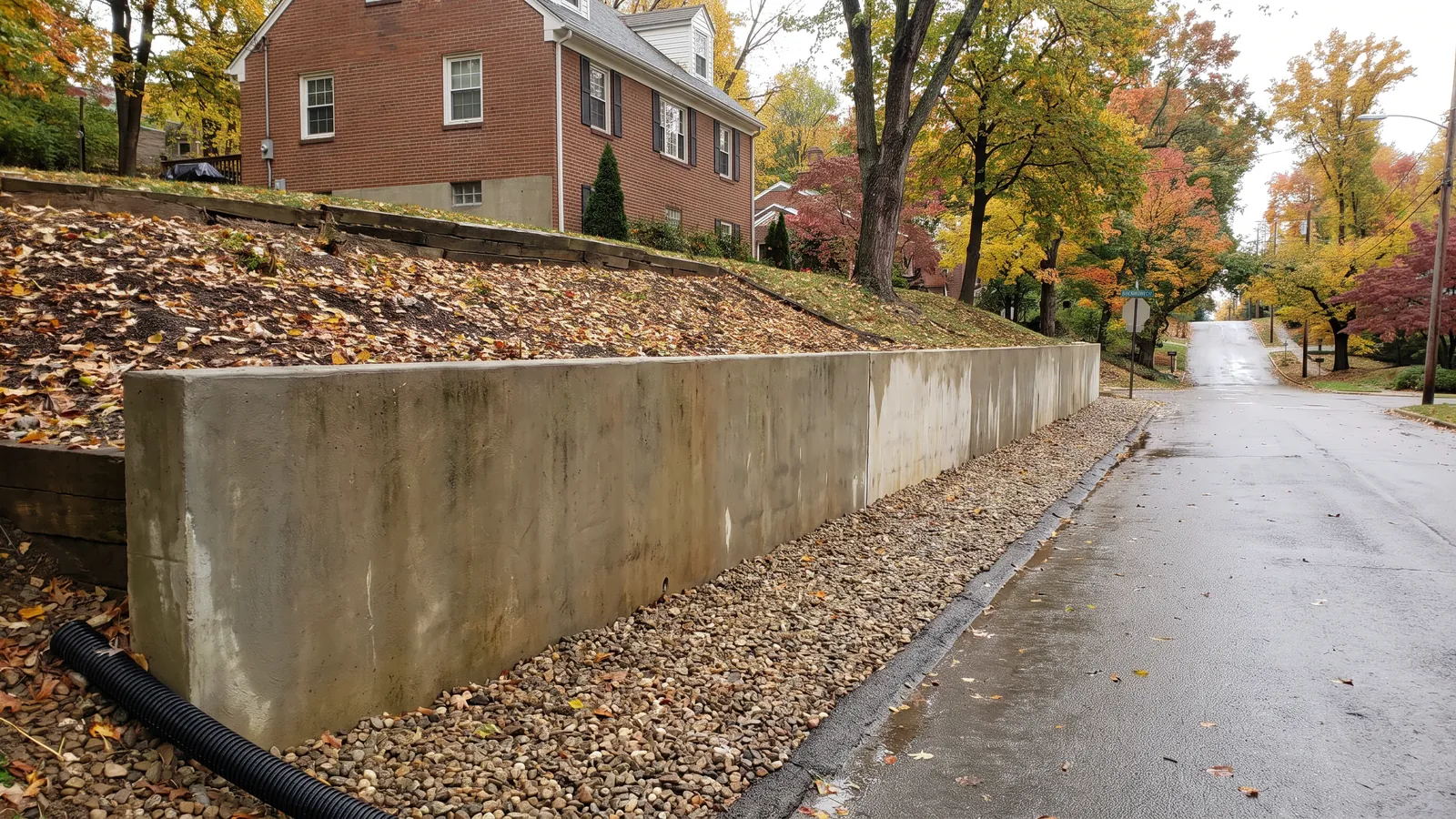
Retaining walls
Poured and block walls with footings and drainage, engineered when the height calls for it.
Read more →Thickness, base, steel, mix, finish, joints, apron
Every written price names the slab thickness, the base depth, the reinforcement, the mix (air-entrained, every time, for anything outdoors), the finish, the joint plan, and the apron under its permit as its own line. That's so two bids can be compared on what they're building rather than on the total, and so what's poured matches what was promised. The licensing and contracts guide explains why that matters in a state with no concrete licence.