Sealing concrete: the cheapest thing you can do for a driveway, and the one most people skip
A sealer keeps water and salt out of the surface. In a freeze-thaw-and-salt climate that's the difference between a slab that lasts and one that flakes. Here's what to use and when.
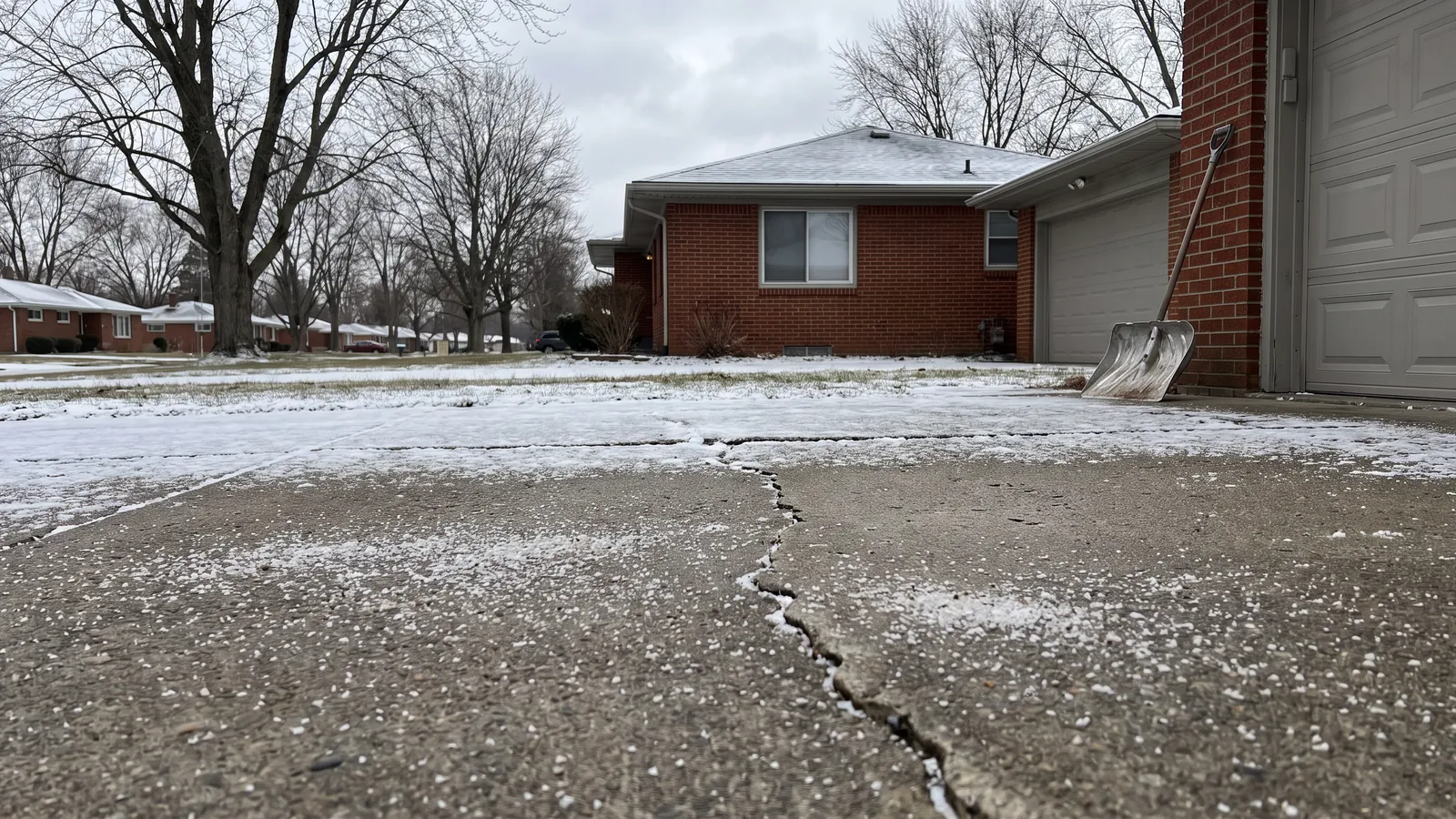
Concrete is porous. Water soaks into the top layer, freezes, expands, and over enough winters pops the surface off, and road salt makes it worse by pushing more freeze cycles into the slab. A sealer closes the pores. It's a sprayer and an afternoon every few years, and in Cincinnati it's the best money a slab owner spends.
Two kinds of sealer
- Penetrating sealers (silane, siloxane, siliconate) soak into the concrete and react with it to repel water without changing the look or the texture. No film to peel, no slipperiness, no gloss. The usual choice for driveways, sidewalks, aprons and plain patios. Re-apply every few years.
- Film-forming sealers (acrylic, polyurethane, epoxy) sit on the surface as a coating. They deepen color, add gloss and protect against stains, which is why they're used on stamped and colored concrete. They can be slippery when wet (a grit additive fixes that), they wear in traffic lanes, and they need re-coating every two to three years. Acrylic is the standard for stamped patios; epoxy and polyurethane are garage-floor coatings.
When to seal
- New concrete: about a month after the pour, once it's cured and dry. Our prices for driveways and patios include the first sealing.
- Existing concrete: any time the slab is clean and dry and the temperature is in the product's range, usually spring or fall. Water beading on the surface means the sealer is still working; water soaking in dark means it's time.
- Before the first winter, above all. An unsealed new driveway that gets salted in January starts its life with damage.
How it's done
- Clean. Pressure wash, treat oil and rust stains, let it dry fully, a day or two.
- Repair first. Seal cracks and patch spalls before the sealer, not after.
- Apply. Pump sprayer for penetrating sealers; sprayer and roller for film-formers, two thin coats rather than one thick one.
- Cure. Off the surface for a day; no cars for two or three.
Stamped and colored concrete
Stamped work depends on its sealer for color and for the release-agent shadowing. It's re-sealed every two to three years with an acrylic designed for decorative concrete, with a slip-resistant additive on any surface people walk on wet. Skipping it is how a stamped patio ends up gray and salt-damaged. The stamped page says more.
What sealing doesn't do
It doesn't fix a slab poured without air entrainment; it slows the damage. It doesn't stop cracks from moving. It doesn't make rock salt safe. And it doesn't last forever; the schedule is the point.
Questions
How often should I seal my driveway?
A penetrating sealer every three to five years; a film-forming sealer every two to three. Sooner if water stops beading.
Can I seal it myself?
Yes, with a pump sprayer and a dry weekend. The prep (clean, dry, repaired) matters more than the product. We seal as part of new work and will do existing slabs.
Will a sealer make my driveway slippery?
Penetrating sealers, no. Film-forming sealers can when wet; a grit additive solves it and goes on steps and pool decks by default.
Does sealing change the color?
Penetrating sealers don't. Acrylics deepen color and add some gloss, which is what stamped work wants and plain broom finish usually doesn't.
Should the apron be sealed?
Yes; it's the most salted concrete you own. A penetrating sealer, re-applied on schedule.
What about a garage floor?
Epoxy or polyurethane coatings are the usual choice there, applied to a ground, clean, dry slab. A penetrating sealer is the no-fuss alternative.
Get a written price
Tell us the job and where it is. Someone calls back the same day, an estimator measures it in person, and you get a written price with the thickness, the base and the finish spelled out. Nothing is poured on a verbal.