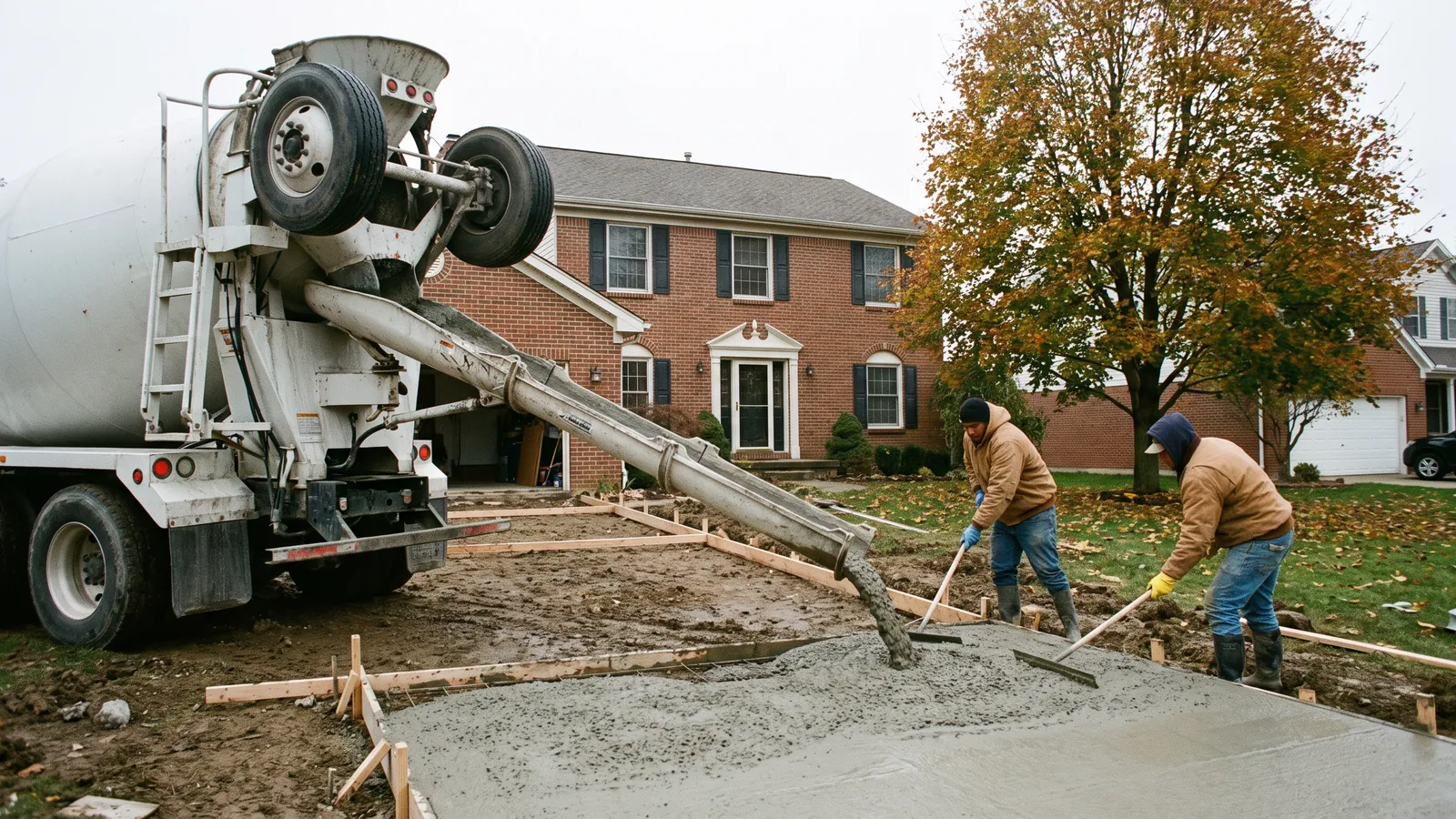
Fresh concrete sets in hours and cures over weeks. Setting is when it stops being workable; curing is the slow reaction between cement and water that builds strength. The slab reaches most of its design strength in about 28 days, which is why engineers test at 28 days and why the first month matters more than the rest of the slab's life.
The timeline
| When | What's happening | What you can do |
|---|---|---|
| Hours 0 to 8 | Setting. The surface is finished and jointed in this window. | Nothing. Keep pets, kids and leaves off it. |
| Day 1 to 2 | Hardened, still weak. Curing compound or wet cure in place. | Careful foot traffic after 24 hours. |
| Day 3 to 7 | Gaining strength fast. Still vulnerable to point loads and marks. | Bikes, bins and light use after a few days. No cars. |
| Day 7 to 10 | Strong enough for cars. | Drive on it. No trucks or trailers yet. |
| Day 28 | Most of the design strength. | Trucks, trailers, heavy loads. Seal around now. |
| Months and years | Strength keeps rising slowly. | Re-seal every few years; no de-icer the first winter. |
Curing is a job, not a wait
Concrete that dries out before it cures stays weak and dusts and cracks. Curing means keeping the water in the slab for the first week. Two ways: a curing compound sprayed on after finishing, which seals the surface, or wet curing with soaked burlap, mist or plastic. In summer heat the slab is kept damp; in cold it's blanketed. In Cincinnati's shoulder seasons it's watched; the winter guide has the cold-weather version.
Things that go wrong in the first week
- A car driven on a four-day-old driveway leaves tire marks that never come out.
- A hot, windy afternoon with no cure on the slab causes plastic shrinkage cracks across the surface.
- Rain on a fresh surface washes the paste and leaves it rough and weak.
- A frost on an uncovered pour scales the surface.
- Joints cut too late, after the slab has already cracked where it wanted to.
Sealing
About a month after the pour, once the slab has cured and dried, a penetrating or film-forming sealer protects it from water and salt. Earlier traps moisture; later leaves the surface exposed through its first winter. The sealing guide covers the choices.
Questions
Can I walk on new concrete the next day?
Carefully, yes, after about 24 hours. Keep heavy things, pets' claws and bikes off it for a few days.
When can I park on a new driveway?
Seven days for cars, ten to be comfortable, 28 for trucks, trailers and anything heavy.
Why does my new concrete look blotchy?
Uneven drying in the first weeks; it evens out over a month or two. Dark patches that stay are usually where the slab stayed wetter under something.
What if it rains the day of the pour?
We watch the forecast and cover the slab if rain threatens after finishing. Rain during finishing is why pours get rescheduled.
Does hot weather speed up curing?
It speeds up setting, which makes finishing harder and shrinkage cracks likelier; curing still needs its month. Summer pours get more cure protection, not less.
When should I seal?
About a month after the pour, on a dry slab. Re-seal every two to three years, sooner on stamped work or where de-icer is used.
Get a written price
Tell us the job and where it is. Someone calls back the same day, an estimator measures it in person, and you get a written price with the thickness, the base and the finish spelled out. Nothing is poured on a verbal.