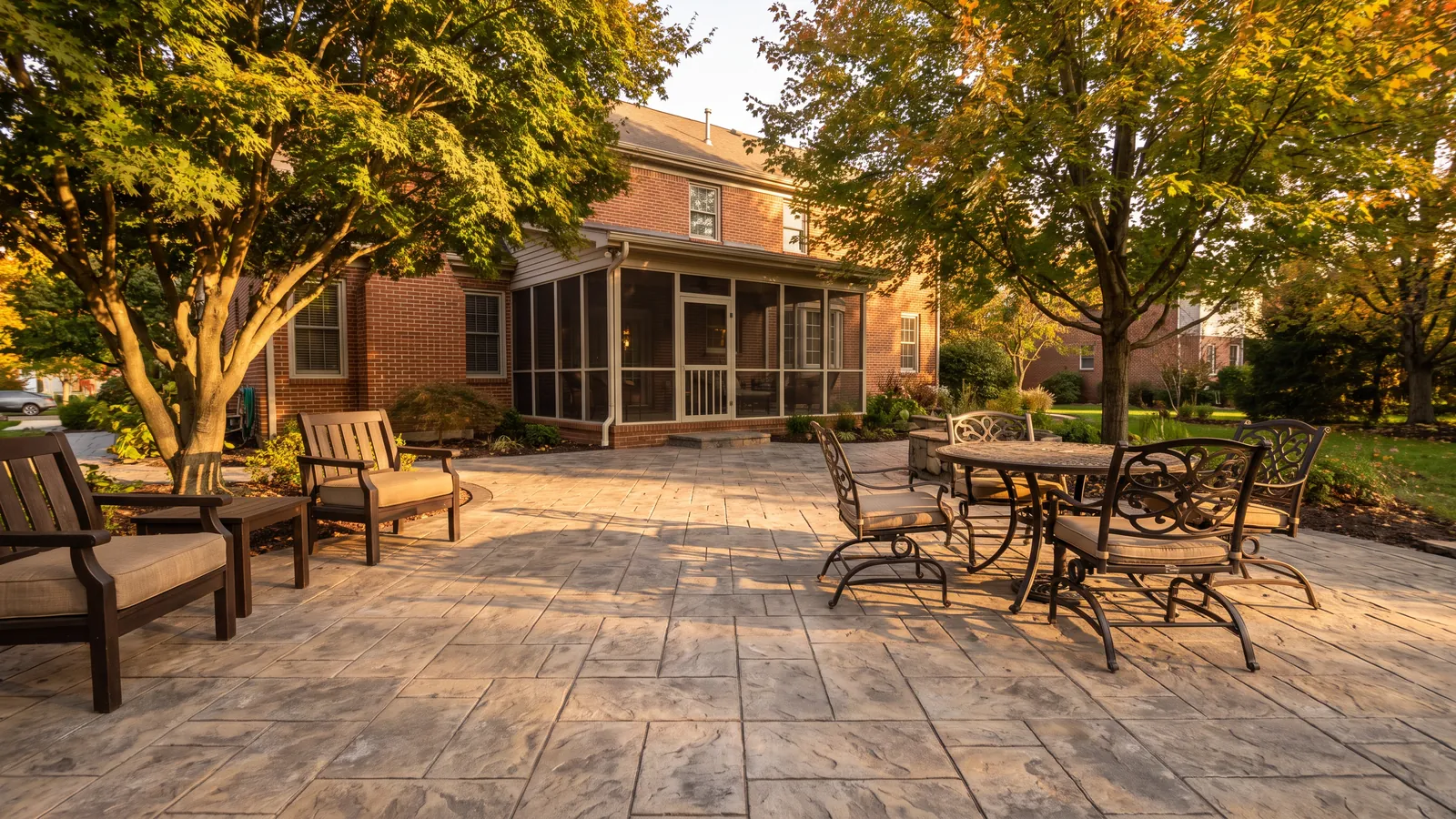
A concrete patio is a 4-inch slab on a gravel base, pitched a quarter inch per foot away from the house, finished in whatever texture you like, jointed, cured and sealed. On a Cincinnati lot it also has to deal with a slope, because few backyards here are flat, and with the freeze-thaw cycle, which punishes any slab that holds water. Those two things, drainage and air in the mix, separate a patio that looks the same in fifteen years from one that's cracked and flaking in five.
Finishes
- Broom finish. The plain one: gray concrete with a light texture dragged across it for grip. Cheapest, most durable, easiest to repair. Published 2026 pricing puts a plain patio at about $4 to $12 per square foot installed (HomeGuide, July 2025 page).
- Exposed aggregate. The top paste is washed off before it sets to reveal the stone in the mix, or a decorative stone is seeded on top. Good grip, hides dirt, mid-priced.
- Stamped and colored. Patterns pressed into the surface (slate, flagstone, wood plank, cobble) with integral color and a release agent for the shadowing, sealed to hold the color. The most expensive finish and the one that needs re-sealing every few years. The stamped page covers it.
- Stained or dyed. Color applied to plain or textured concrete after it cures. Cheaper than stamping, more variable in result.
What's under the finish
- Grade and drainage. A quarter inch of fall per foot away from the house; on a sloped lot, sometimes a step down or a short wall to keep the patio flat and the water moving. Water that sits on a patio freezes on it.
- Base. Four inches of compacted gravel; more where the ground was recently filled.
- Thickness and reinforcement. Four inches, with fiber or wire mesh. A hot tub, a masonry outdoor kitchen or a pergola post means a thicker section or a footing under that spot, which is why the estimator asks what's going on it.
- Air entrainment. In the mix, every time. A patio that gets de-icer thrown on it by the back door needs it as much as a driveway does.
- Joints. Control joints in a pattern that works with the shape, isolation joints at the house and any posts.
- Cure and seal. A week under cover, a sealer after about a month, and a re-seal every couple of years for stamped work.
Pool decks, porch floors and extensions
A pool deck is a patio with a bigger drainage job and a slip-resistant finish; broom or exposed aggregate rather than smooth. A covered porch floor is poured to the same spec but with a smaller pitch. An extension to an existing patio is doweled into the old slab so they don't settle apart, and the old patio's level and finish decide whether matching is realistic or whether an overlay over both is the better look.
Cost
By the square foot and the finish, with the base, any step or wall, and removal of an old patio as their own lines. The patio cost page has published size-by-size figures and what changes them here.
Questions about this work
How big a patio do I need?
A table for six wants about 12 by 14 feet; a lounge set and a grill, 16 by 16 or more. We'll chalk it on the grass with you during the estimate so you can walk around the furniture in your head.
Can a patio be poured against the house?
Yes, with an isolation joint between the slab and the foundation so they can move separately, and a pitch away from the house. Never flat, never toward it.
Will it crack?
Concrete cracks; the joints decide where. A patio with control joints cut at the right spacing cracks in the joints, where you can't see it. A patio without them cracks across the middle.
Can I put a hot tub on it?
Tell us at the estimate. A filled hot tub is heavy and wants a thicker section with rebar under that spot, poured as part of the slab.
Do I need to seal a plain patio?
It helps, especially against de-icer and staining, and it's cheap. Stamped and colored patios need it to keep their color.
What about pavers instead?
Pavers cost more installed, can be lifted and relaid, and shift over time on our clay. Concrete is cheaper, more rigid, and with stamping can look like anything pavers look like. Either is a fine patio done well.
Get a written price
Tell us the job and where it is. Someone calls back the same day, an estimator measures it in person, and you get a written price with the thickness, the base and the finish spelled out. Nothing is poured on a verbal.