Concrete in Ohio winters: pouring late, salting early, and the damage in between
Cincinnati freezes and thaws over and over each winter, and the salt trucks run. Here is what that does to concrete, how to pour when it's cold, and the one ingredient that makes the difference.
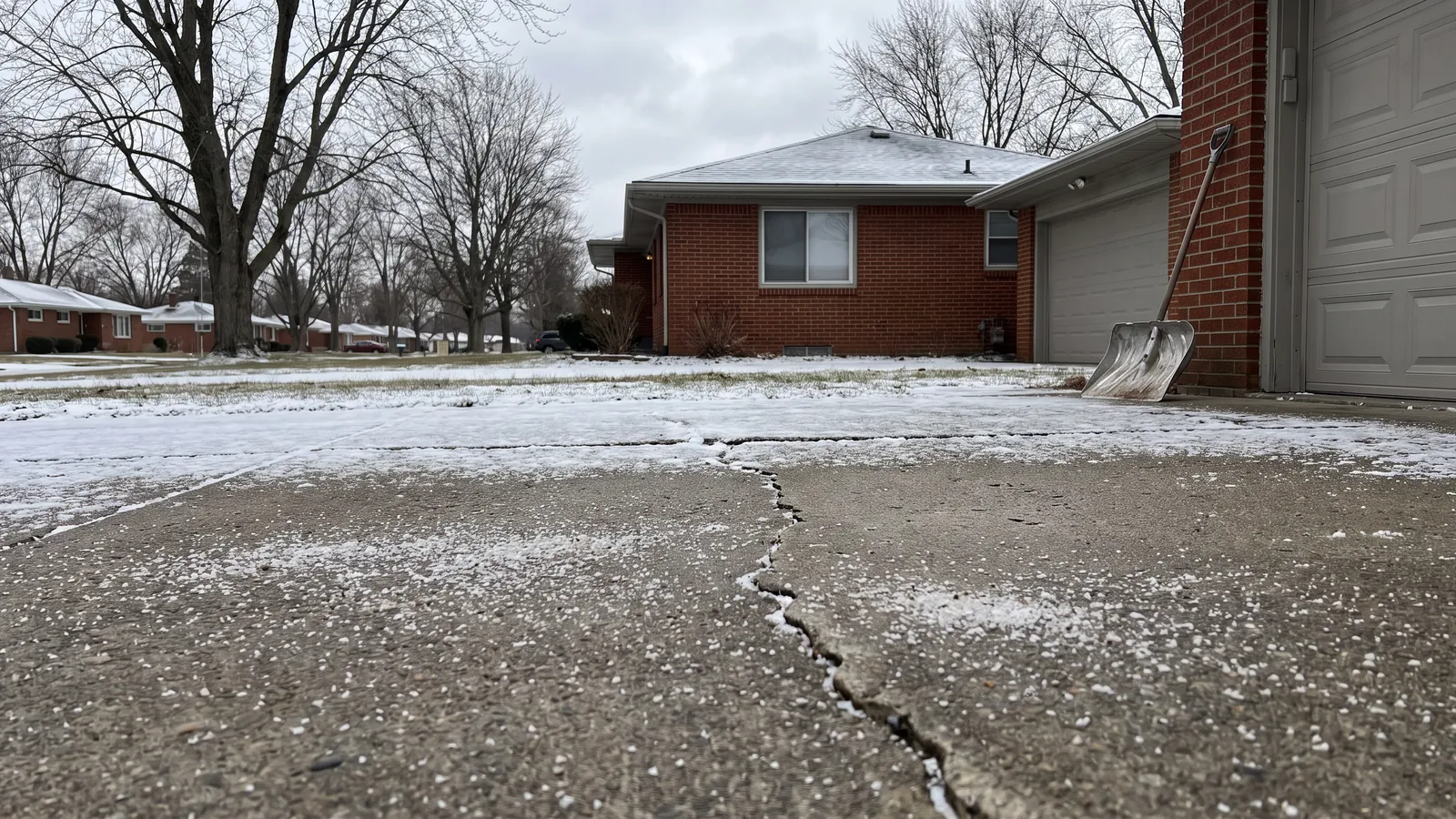
Concrete and cold don't mix well, and Cincinnati winters are the kind that freeze and thaw repeatedly rather than freezing once and staying there. Every thaw lets water into the surface; every freeze expands it. Add road salt, which keeps water liquid at lower temperatures and drives more freeze cycles into the top of the slab, and a driveway poured without the right mix flakes within a few winters. This page is the practical version: when to pour, how, and how to treat the slab afterward.
When concrete can be poured here
Comfortably from about March through early December. Concrete needs to stay above roughly 40°F for the first days while it gains strength; below that, hydration slows and, if the water in the mix freezes before the concrete is strong enough, the slab is damaged permanently. A pour in the shoulder months watches the forecast for the nights, not just the days.
Pouring in cold weather
- Cold-weather mix. The plant can add an accelerator so the concrete sets faster and gains strength before the cold reaches it, and can heat the water and aggregate.
- Insulated blankets. Laid over the slab after finishing and kept on for several days, holding in the heat the concrete generates as it cures.
- Frozen ground. Never pour on it. The base has to be thawed, or the job waits.
- Timing. Pour early in the day so the slab has the warmest hours to set.
- Curing compounds versus water curing. In cold weather, a curing compound rather than wet curing, so there's less free water to freeze.
Air entrainment, the ingredient that matters
An air-entraining admixture creates billions of microscopic bubbles in the concrete. When water in the surface freezes and expands, it has somewhere to go. Concrete without entrained air has nowhere for that pressure to go and spalls. It's standard in every exterior mix we order and it's on the mix ticket, which you can ask to see. An old driveway that flakes a little more every spring is almost always one poured without it.
Salt
Rock salt lowers the freezing point of water, which is why it clears ice and why it's hard on concrete: the surface goes through more freeze-thaw cycles, and the brine soaks deeper. Rules that help:
- No de-icer at all the first winter. New concrete is most vulnerable before it has fully cured and been sealed. Sand for grip.
- Seal after the first month and re-seal every few years. The sealing guide.
- Prefer calcium or magnesium chloride over rock salt (sodium chloride) on sealed, cured concrete, and use less than you think. Never ammonium-based products, which attack concrete chemically.
- Shovel first, then a little de-icer, rather than de-icer alone.
- Watch the car. Salt brine dripping off a parked car onto a garage floor or driveway does more damage than the bag in the garage.
Frost depth and footings
The Residential Code of Ohio sets the frost line at 30 inches, with a minimum footing depth of 12 inches. Anything with a footing (steps, walls, a garage with walls on the slab) goes below 30 inches or it heaves. A plain slab floats on its gravel base and rides the frost, which is fine for a driveway and not fine for a wall.
Questions
Can you pour a driveway in December?
Early December in a mild stretch, with a cold-weather mix and blankets, yes. Once the ground freezes, no. We'd rather schedule you for March than pour badly.
Why is my driveway flaking?
Freeze-thaw on a mix without air entrainment, usually with salt on top. The surface pops. Grinding and overlay can save a lightly flaked slab; a badly flaked one is replaced.
What de-icer is safe for concrete?
On cured, sealed concrete: calcium chloride or magnesium chloride, sparingly. Rock salt is harder on it. Nothing at all the first winter.
How long does new concrete need before winter?
About a month to cure and be sealed before it should see de-icer, so a late-October pour is about the latest for a driveway that will be salted.
Does cold weather slow the job?
Yes: longer set times, blankets to place and remove, and more weather days. Spring and fall jobs are planned around the forecast.
What's the frost line in Cincinnati?
30 inches under the Residential Code of Ohio. Footings for steps, walls and garages go below it.
Get a written price
Tell us the job and where it is. Someone calls back the same day, an estimator measures it in person, and you get a written price with the thickness, the base and the finish spelled out. Nothing is poured on a verbal.